研究编号 / Chapter ID: SUG-PHY-V01-C008 | 版本 / Version: R1 | 状态 / Status: Bilingual draft + initial source review | 2026-11-08
全书暂不发布 / Publication held until 180 chapters and whole-book review are complete.
本章核心问题 / Core question
有效茎数、单茎鲜重和糖分如何共同构成单位面积产量? 哪些变量是实测、推算或工厂回收指标,怎样避免把浓度、总量和相关性混为一谈?
How do millable stalk density, individual fresh stalk mass and sugar recovery combine to determine yield per area, and how can measurements, estimates, industrial outputs and causal claims be kept distinct?
表1 / Table 1 — 产量术语与单位 / Yield terms and units
指标 / Indicator | 单位 / Units | 必须记录 / Required qualifier |
|---|---|---|
鲜蔗产量 / Fresh cane yield | t fresh stalks ha⁻¹ | 净地块面积、切稍与去叶标准 / harvested boundary |
有效茎密度 / Millable stalk density | stalks m⁻², stalks ha⁻¹ | 活茎与有效茎定义 / qualifying stalk definition |
平均单茎鲜重 / Mean stalk fresh mass | kg fresh stalk⁻¹ | 与茎数同群体、同日期 / matched sample |
Pol / Brix / Fibre | % of specified sample | 汁液或全蔗基准及方法 / analytical matrix |
可回收糖分 / Recoverable sugar fraction | % cane or kg Mg⁻¹ | 地区回收模型 / regional recovery model |
估计糖产量 / Estimated sugar yield | t sugar ha⁻¹ | 鲜蔗量×指定回收率 / defined estimate |
干物质产量 / Dry biomass | Mg dry matter ha⁻¹ | 仅干基,不与鲜蔗直接相加 / dry basis |
一、研究对象与产量边界 / Research subjects and yield boundaries
1.1 产量不是一个单值 / Yield is not one single measurement
甘蔗“产量”至少有四套口径:田间全部地上部鲜质量、可收获有效茎鲜质量、可送厂原料蔗净质量以及以既定检验和回收模型计算的糖产量。 只有最后三者常进入产量构成研究;四者的分母、收获边界和杂质处理均不同。 鲜蔗产量通常以t/ha记录,但它包含茎内水分,不能与地上部干生物量直接比较。 将叶、梢、青叶和泥土计入称重会改变估计对象,不能事后只改变名称。 [S02,S06,S08]
Sugarcane “yield” denotes several non-equivalent outcomes: total aboveground fresh mass, fresh mass of millable stalks, net cane delivered as feedstock, and sugar yield estimated with a specified analytical and recovery protocol. Fresh cane yield includes stem water and cannot be compared numerically with dry biomass. Inclusion or exclusion of tops, leaves, trash and soil changes the mass boundary, not merely the variable label. An explicit harvest boundary is a prerequisite for comparing trials. [S02,S06,S08]
1.2 有效茎与群体单位 / Millable stalks and population units
有效茎是达到具体研究或生产端可收获标准的活茎,而不等于出苗数、分蘖峰值、所有现存茎数。 应记录是否包括倒伏茎、细弱茎、未完全成熟茎和已抽穗茎,并说明剥叶切稍标准。 调查可先按固定样方或定行长度逐茎数取,再换算为m²及ha;误把“每行米株数”直接当“每平方米”会造成系统误差。 田块边界行通常不能代表独立均匀群体。 [S01,S02,S05]
A millable stalk is a live stem meeting a stated harvest criterion. It is not the count of all emerged tillers or every standing culm. Trials should state whether lodged, thin, senescent or immature stems qualify and how topping and stripping are performed. Record the counted row length and row spacing before converting stalks per metre of row into stalks per square metre or hectare. Guard rows and uneven stand gaps are not representative experimental units. [S01,S02,S05]
1.3 何时、在哪里、由谁测量 / Measurement timing and domain
产量比较需要标明品种、地点、蔗龄(月或积温)、新植/第几宿根、收割日期、收获前降雨、田间运输与实验室检测间隔;同一材料在不同时点的水分变化就足以改变鲜重。 甘蔗种植、灌溉和机械作业规程应链接专业百科,本章主要保留这些措施导致的生理与统计影响,不用某个地区的工厂结算规则代替通用科学定义。 [S02,S06]
Comparisons require cultivar, site, crop age, plant-cane/ratoon cycle, date and preharvest weather, harvest delays, transport and laboratory storage. A water-content shift can change fresh mass without commensurate dry matter gain. Engineering protocols belong in their specialist encyclopedias; the ecophysiology chapter explains mechanisms and measurement consequences. No single regional mill-payment formula is accepted as a universal physiological definition. [S02,S06]
二、茎数×单茎重的构成机制 / Stalk-density × stalk-mass framework
2.1 量纲恒等式 / Dimensional identity
当有效茎数N以stalks/ha计、平均单茎鲜重W以kg/stalk计时,鲜蔗产量Y(t/ha)=N×W÷1000。 若有效茎密度n以stalks/m²计,则Y=10×n×W。 只有茎数与单茎重指向同一时间、同一田块面积、同一切稍标准和同一茎群,乘积才有可比意义;把另一个试验的单茎重与本试验茎数相乘只是示例计算,不是测量值。 [S02,S05,S06]
For millable stalk number N (stalks ha⁻¹) and mean stalk fresh weight W (kg stalk⁻¹), cane yield Y (t ha⁻¹) equals N × W / 1,000. Equivalently, with density n (stalks m⁻²), Y = 10 n W. The identity is valid only when mass and count refer to the same population, harvest date, trimming boundary and area. Multiplying measurements from separate studies yields an illustration, not a reported crop yield. [S02,S05,S06]
2.2 茎数建立、死亡与补偿 / Stem recruitment, mortality and compensation
有苗不等于有有效茎。 初期萌芽、分蘖发育、竞争死亡、倒伏及机械损伤逐步筛选最终有效茎群体。 茎数增加会提高早期竞争和截光,却可能缩小单茎可用空间与平均直径;反之单茎增重可能补偿稀疏群体的一部分损失。 James(1971)在其研究的三个群体中观察到茎数与直径负相关,但不能据此将补偿关系视为普适机制。 [S01,S04]
Stem number emerges from recruitment, tiller survival, competition, lodging and damage rather than a fixed planting count. Dense stands can intercept light early but may alter resource supply per stalk; larger individual stalks can partly compensate for sparse populations. James (1971) observed negative stalk-number versus diameter associations in sampled populations. The observation supports a trade-off hypothesis, not an invariant physiological law. [S01,S04]
2.3 单茎质量的几何与生理基础 / Geometry and physiology of stalk mass
单茎鲜重反映茎长、节间数、近似截面积、髓化或空腔比例、含水率和密度等因素。 单纯直径增加不必然伴随更高蔗糖比例:纤维与薄壁储糖组织的分配也会变化。 切勿仅用“茎高×直径”替代单茎真实质量;简化圆柱估算忽略上粗下细、节间不均和髓化等情况。 巴西17家系研究以茎数与平均茎重作为选择指标,但主要为相关与路径分析。 [S02,S03]
Individual stalk mass reflects height, internode architecture, cross-sectional area, pith or void fraction, water content and density. Diameter is not a direct proxy for sucrose percentage: structural fibre and storage parenchyma may vary independently. A cylindrical volume model neglects taper, irregular internodes and pith. The 17-family Brazilian work highlights associations among stalk number, weight and yield, rather than an experimental proof that altering one trait alone changes crop yield. [S02,S03]
三、从鲜蔗到可回收糖 / From cane mass to recoverable sugar
3.1 四个品质指标不可混称 / Four quality indices are different
折光或密度法Brix主要反映汁液可溶性固形物,包含蔗糖、葡萄糖、果糖及其他溶质。 Pol为偏振测得的表观蔗糖指标;纯度Purity通常依据特定汁液样本的Pol/Brix×100报告;纤维分数及取汁方法影响从汁液到全蔗质量的换算。 蔗糖浓度高、Brix高、Pol高与最终可回收糖分数高并非严格同义。 每项必须同时保存样本类型及实验室标准。 [S02,S05,S06,S07]
Brix mainly expresses soluble solids in juice; Pol is apparent sucrose measured by polarimetry. Purity is commonly Pol/Brix × 100 for a specified juice preparation. Fibre content and juice-extraction method affect the translation from juice to whole-cane quality. High Brix is not synonymous with high recoverable sucrose, and neither measures realized mill output. Record the sample type and analytical protocol with every result. [S02,S05,S06,S07]
3.2 糖产量分母与回收系数 / Sugar yield denominators and recovery factors
如用估计可回收糖分数r(0–1)定义田间糖产量,Y糖(t/ha)=Y蔗(t/ha)×r;若以百分数R记录,则乘R/100。 也有研究用kg可回收糖/Mg鲜蔗、吨糖/公顷或单位面积年化糖产量,转换前必须核实。 埃及2015年论文采用其特定榨糖回收校正因子,埃塞俄比亚2021年论文采用另一套估算模型;两者不能不经标定直接合并。 [S02,S06]
Given a defined recoverable sugar mass fraction r, estimated sugar yield (t ha⁻¹) equals cane yield × r. If the fraction is expressed as a percentage R, divide by 100. Other studies use kilograms of recoverable sugar per metric tonne of cane, tonnes of sucrose per hectare or annualized sugar yield. Recovery models, mill factors and sample assumptions vary among studies (notably the Egyptian and Ethiopian experiments) and require local validation before pooling. [S02,S06]
3.3 糖的浓度与糖的总质量 / Sugar concentration versus total sugar mass
茎内糖含量升高可来自新蔗糖输入、转化与外运变化,也可能部分来自水分下降造成的浓缩;鲜重下降可能同时发生。 要证明净糖质量增加,应同时测含水量、干质量、全茎糖分和有效茎总量,并将节位的时间变化连成质量平衡。 澳大利亚节间代谢组研究发现生育阶段是代谢变异的重要解释因素,但相关网络尚不等于碳通量的直接测定。 [S07]
A rise in measured sucrose concentration can reflect import and storage, biochemical turnover or reduced water content. To infer net sugar-mass accumulation, measure stalk moisture, dry mass, sugar per stem and the millable stem population over time. The Australian internode metabolomics study linked developmental stage to quality-associated metabolite profiles but did not directly quantify whole-plant carbon flux or prove causal transport pathways. [S07]
表2 / Table 2 — 测量变量与常见误用 / Assays and common misinterpretations
指标 / Metric | 代表含义 / Meaning | 不可等同 / Not equivalent to |
|---|---|---|
Brix | 汁液可溶性固形物 / soluble solids | 纯蔗糖占比 / pure sucrose |
Pol | 表观蔗糖 / apparent sucrose | 工厂最终白糖 / produced sugar |
Purity | 给定汁液Pol/Brix×100 | 全蔗纤维与回收率 / recoverability |
CCS / ERS | 依地区公式的可回收糖指标 / model-defined | 各国统一常数 / universal coefficient |
四、发育阶段、宿根和生态区 / Development, ratooning and environments
4.1 生长与成熟的时间竞争 / Timing of growth and ripening
较早收获可能牺牲茎重与可回收糖;延迟收获可能增加汁液品质,但同时带来倒伏、病虫、茎秆老化或水分下降的风险。 两者效应应以连续月龄曲线而非两次采样点作比较。 埃塞俄比亚Finchaa的两品种试验设置12—16月龄五级处理,结果显示16月龄部分品质指标最高,但试验未覆盖更晚年份或其他生态区。 [S06]
Harvest earlier and later in crop development creates a trade-off between continued stalk growth, sucrose maturation and risks of lodging, pests and dehydration. A harvest-date response curve is preferable to a single late-versus-early contrast. At Finchaa, Ethiopia, a factorial experiment tested two cultivars at five harvest ages (12–16 months); it does not establish an optimum harvest date beyond that tested window or across environments. [S06]
4.2 新植与宿根的构成差异 / Plant-cane versus ratoon differences
宿根蔗从残茬与地下根系重新建群,空间格局、返青速度和有效茎存活过程与新植蔗不同。 埃及31材料、连续三个蔗作周期的试验中,第二宿根蔗的多个汁液品质均值相对较高,而一些鲜蔗产量构成反而较低,提示选择高糖分并不自动提高单位面积糖产量。 不能把地点单一的显著性或遗传率估计推广至所有宿根类型。 [S02]
Ratoon crops regenerate from surviving stools and basal buds, altering stand topology, emergence and effective stalk survival. In a 31-genotype Egyptian study over plant cane and two ratoons, average juice-quality traits could increase while some cane-yield components decreased. Better juice composition therefore need not increase total sugar per hectare. Single-site heritability or statistical significance should not be generalized to all ratooning systems. [S02]
4.3 生态与水分影响 / Climate, soils and water status
雨养与灌溉蔗区受旱、水淹、极端高温、低温与辐射限制的路径不同。 水分影响分蘖存活和节间膨压,又直接影响鲜重及汁液浓度,容易与糖积累混淆;养分与土壤限制还会改变单位面积干物质与可收获部分的分配。 巴西三地点宿根蔗研究鲜蔗产量为67—211 Mg/ha,显示场地差异不应由一个通用常数掩盖。 [S08]
Irrigated and rainfed environments differ in their response to drought, flooding, temperature and radiation. Water affects tiller survival, turgor-driven elongation and measured cane fresh mass, potentially confounding juice-concentration changes. Soil and nutrient status shift biomass partitioning and harvest index. A three-site Brazilian ratoon study recorded 67–211 Mg ha⁻¹ cane yield, underscoring the danger of using a single universal conversion coefficient. [S08]
表3 / Table 3 — 试验设计的明确边界 / Design boundaries
来源 / Source | 试验 / Design | 独立单位与限制 / Unit and limitation |
|---|---|---|
S02 | Egypt | 31品种 × 新植及2次宿根;3区组;15m²小区 | 小区 / plot, 20茎为内样本 / stalk subsamples |
S06 | Ethiopia | 2品种 ×5收获月龄 ×3重复;约65m²小区 | 小区 / plot; 30茎为内样本 |
S07 | Australia | 24品种 ×5阶段,1,440节间合并360样 | 节间/代谢样本不等于独立地块 |
五、原始试验与相反证据 / Primary studies and counterevidence
5.1 三类田间证据 / Three field-evidence designs
历史群体研究可通过路径分析指出茎数、直径与产量关联,现代重复区组试验可对品种和月龄做推断,连续时序研究可以区分时间相关性与某一时点差异;这些设计所回答的问题不相同。 James(1971)三个群体的模型可解释变异比例为82%、84%、84%,但该值是特定材料中的统计结果,不能作为生产预报精度;文献全文尚未核读。 [S01,S02,S06]
Historical population path analyses reveal trait associations; randomized block trials estimate treatment responses; developmental series examine temporal change. Their inferential limits differ. James (1971) reported explained variation of 82%, 84% and 84% for three populations using stalk traits, but those are population-specific model outcomes, not validated commercial forecasts. The full paper remains uninspected in this chapter. [S01,S02,S06]
5.2 支持与反向观察并存 / Contrasting observations must remain
泰国多年份资料再分析报告新植蔗、第一宿根和第二宿根的茎数、茎高和直径相对作用会改变;埃及试验则显示糖分品质随宿根周期增加而平均上升,即便蔗产量有所下降。 不同材料、年度、试验地点和指标权重下,不能简单断言“增加茎数”或者“增加Pol”必然提高最终糖产量。 两项研究独立性不能从两个不同文献标题中自动得出,应逐项保留。 [S02,S04]
Thai historical trials indicated shifting relative roles of stalk number, height and diameter across crop cycles; the Egyptian trial documented increased mean juice-quality indices in later ratoons despite lower cane-yield components. Thus neither increasing stalk number nor improving Pol alone guarantees greater sugar output. Apparent agreement between publications does not substitute for audit of underlying field experiments and shared data. [S02,S04]
5.3 转基因试验不是普适产量标准 / Transgenic plots are not a global benchmark
2017年抗病毒转基因甘蔗研究报告B48的鲜蔗产量102.72 t/ha,对照Badila为61.61 t/ha;其他转基因研究报告的则是通过茎高、直径、Brix与茎数推算的理论蔗产量或糖产量。 两类结果不能同名合并,更不能作为未审定品种的推广依据。 病害压力、比较品种和试验地点等均是重要解释变量。 [S05,S09]
A 2017 virus-resistant transgenic sugarcane report gave 102.72 t ha⁻¹ for line B48 and 61.61 t ha⁻¹ for Badila. A separate transgenic herbicide/insect-resistance paper presented theoretical yields inferred from height, diameter, Brix and stalk count. These estimands must not be pooled or interpreted as realized mill output. Neither study supports a universal cultivation recommendation. [S05,S09]
表4 / Table 4 — 原始研究定量结果 / Published quantitative results
原始来源 / Original source | 报告数据 / Reported data | 解释边界 / Interpretation |
|---|---|---|
S01 James (1971) | 82%, 84%, 84% explained variation | 三群体统计量;摘要级核查 / three specific populations |
S05 Yao et al. (2017) | B48 102.72 vs. Badila 61.61 t/ha | 特定转基因抗病试验 / transgenic trial |
S06 Urgesa & Keyata (2021) | NCo334 Brix=19.52 (16 mo); B52/298 ERS=12.78% (16 mo) | 不同品种和不同测定 / distinct traits |
S08 Brazil ratoon (2016) | 67–211 Mg/ha fresh cane yield | 3地点范围 / 3-site range |
六、指标方法与统计设计 / Metrics, methods and statistics
6.1 田间收获测量顺序 / Field sampling protocol
建议按“明确小区净收获面积—标定有效茎—分单位计数—采20—30根内样—记录样本与全田块鲜重—同批取汁和纤维检测—形成可复核数据库”的顺序执行。 埃及研究每小区20根用于性状/汁液,Finchaa研究为每收获小区30根;这些是小区内亚样本,不是20或30个独立小区。 若研究设计为三个区组,则大多数处理推断的独立统计单位是地块而非单茎。 [S02,S06]
A defensible protocol defines net plot area and millable-stalk criteria; counts stalks within each experimental unit; weighs net harvested stalk mass; subsamples stalks for geometry and juice/fibre tests; and links laboratory results back to the plot ID. The Egyptian paper sampled 20 stalks per plot and Finchaa sampled 30. Such stalks are within-plot subsamples, not 20 or 30 independent experimental replicates. For block-randomized comparisons, plot—not stalk—is generally the experimental unit. [S02,S06]
6.2 定义计算与不确定度 / Calculations and uncertainty
在同一小区应保存茎数N、称重W总、净面积A、每平方米茎密度、平均单茎重、Pol、Brix、纤维分数、回收模型和最终糖产量。 若用平均单茎重乘茎数复原蔗产量,其不确定度必须考虑同一小区内茎数与单茎重可能相关;先算各小区产量再做区组分析比把所有茎合并成一个大样本更稳妥。 缺测项应写null及原因,绝不可设定为零。 [S02,S03,S06]
At the plot level retain net area A, total count N, total harvested weight, average stalk mass, Pol, Brix, fibre fraction, recovery method and calculated sugar mass. Density and stalk weight may covary, so uncertainty cannot be propagated as though they were independent. Compute plot-level outcomes first, then analyse blocks; do not pool all stalk subsamples into a falsely large sample size. Missing values should be stored as null with a reason, never silently assigned zero. [S02,S03,S06]
6.3 数据库最小字段 / Minimal interoperable schema
主键依次包括study_id、site_id、year、crop_cycle、genotype_id、block_id、plot_id、sampling_date和harvest_id;指标需记录value、unit、mass_basis(fresh/dry)、area_basis、numerator/denominator、topping_boundary、measurement_method、data_kind和source_locator。 原始测量、发表汇总、单位换算和教学示例必须分开,并维护原始文献DOI、许可及图片校验。 每条产量结论至少能回溯到一次明确的面积和质量测定。 [S05,S06,S08]
Minimal keys are study_id, site_id, year, crop_cycle, genotype_id, block_id, plot_id, sampling_date and harvest_id. Each measurement carries value, unit, fresh/dry mass basis, ground-area basis, numerator/denominator, trimming boundary, method, data type and source locator. Raw observations, published means, conversions and pedagogic examples remain separate. Each yield claim should ultimately point to a defined area and mass determination, with source identifiers, rights and image checksums retained. [S05,S06,S08]
表5 / Table 5 — 单位换算示例(不是试验结果) / Worked illustration only
假设 / Assumption | 计算 / Formula | 结果 / Result |
|---|---|---|
n=10 stalks/m²; W=1 kg/stalk | Y=10×n×W | 100 t/ha cane |
Y=100 t/ha; R=11% | Sugar=100×0.11 | 11 t/ha estimated sugar |
重要说明 / Caution | 假设参数未经测量 / illustrative inputs | 不得列入发表记录 / not reported evidence |
七、真实图像、图表与数据证据 / Authentic imagery and data evidence
7.1 田间照片能说明什么 / What a field photo can and cannot show
真实蔗田照片可展示冠层覆盖、植株高低、行距表观及收获状况,但未经尺度标定与田块编号不能直接证实有效茎密度、平均单茎重或糖产量。 第001章已核实的澳大利亚蔗田照片在本章作为真实群体形态证据复用,沿用作者署名与许可,不重复计算为新独立证据。 [IMG-001]
An authentic field photograph can document canopy form, stand uniformity, visible rows and harvesting context. Without a calibrated scale and a plot identifier, it cannot establish actual millable-stalk density, mean mass or sugar yield. This chapter reuses a previously verified Australian field photograph with its original attribution and license; reuse does not create a new independent observation. [IMG-001]
7.2 数据图的证据身份 / Evidentiary status of graphs
原论文中图表属于发表汇总或作者绘制的图形,而非自然照片。 即使开放获取,也不能把图中的处理均值伪装成逐株数据;如需数字化曲线,应记录软件、坐标和误差,不与表格原数值混合。 本章对新搜索的两幅CC BY-SA收割照片各尝试一次下载,均未取得原件,故仅保留来源与许可线索。 [S01,S06]
Published charts represent reported summaries or author-generated visualizations, not field photographs or raw observations. If a curve is digitized, record software, axes and extraction uncertainty separately from tabular measurements. Two additional CC BY-SA photographic candidates were each attempted once but their original bytes were not acquired; they remain leads and are not counted as obtained figures. [S01,S06]
7.3 相片与尺度数据库交联 / Linking photographs to measurements
今后新摄或获许可的田间称重照片,应有独立的image_id、plot_id、日期、方位与照片尺度;切稍和去叶前后照片要配对,同时留存源文件SHA-256和权属。 甘蔗剖面图需标明切取节位、显微标尺和品种,否则难以解释纤维及薄壁组织占比与糖分的关系。 与图片对应的数值不得凭视觉估算。
Future licensed measurement photographs should retain image_id, plot_id, timestamp, direction and physical scale. Before/after topping and stripping views should be linked. Internode sections need variety, internode rank and microscopic scale bar to support interpretation of fibre and storage tissue. Record original file SHA-256 and license. Numerical yield or sugar estimates must never be inferred from appearance alone.
图1 / Figure 1 — 真实田间群体 / Authentic crop canopy
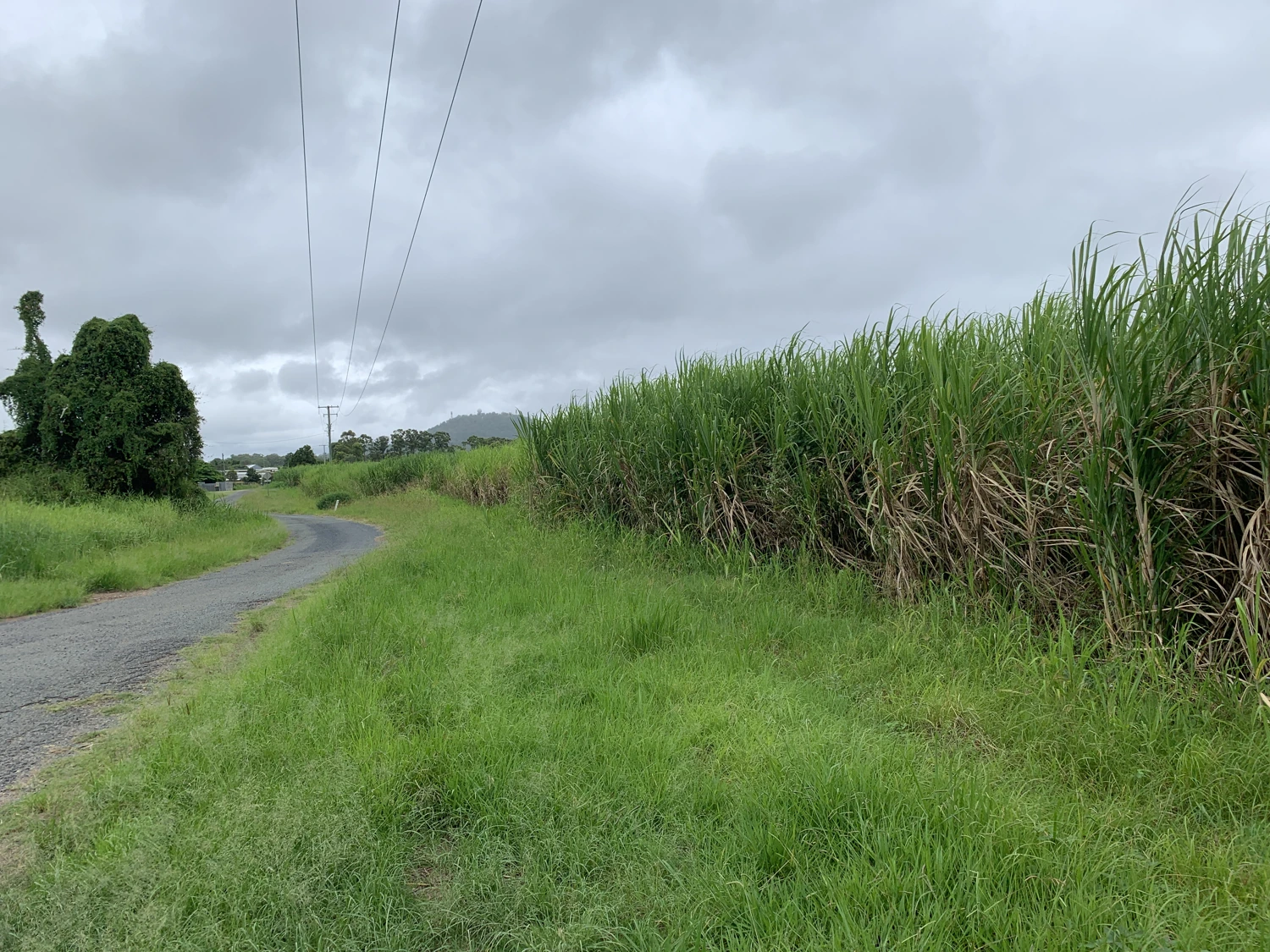
网页预览经过缩放或格式转换,未裁切;原比例尺与标签保留。 / Web preview resized or re-encoded without cropping; original scales and labels retained.
真实甘蔗田群体;照片说明冠层与田块背景,不提供本田块有效茎数、单茎重或糖产量数据。 摄影:Kerry Raymond,2022年;CC BY 4.0。 Authentic sugarcane field. The photograph documents a crop canopy, not measured millable stalk density, mean stalk mass or sugar yield for this field. Photograph: Kerry Raymond (2022), CC BY 4.0.
八、适用边界与跨章节衔接 / Scope, caveats and chapter links
8.1 相关不代表干预因果 / Association is not causation
“茎数多的群体产量高”既可反映群体建立的生理优势,也可能受品种、天气、土壤与水肥管理共同控制。 相关与路径模型不排除未测混杂,更不能替代随机化的增密、疏株或品种更换试验。 已知单个处理点不能外推全球参数。 第007章的干物质累积是产量形成过程,第008章则锁定最终面积质量与可回收糖,后续成熟与积糖卷才解释源库调控机制。 [S01,S03,S07]
Correlations between stalk number and yield can reflect stand establishment but also shared genetic and environmental drivers. Path coefficients do not remove unmeasured confounding or replace randomized density, thinning or cultivar interventions. No single treatment result provides a universal coefficient. Chapter 007 explains growth and dry-matter accumulation; this chapter fixes final area-based harvest and recoverable-sugar outcomes. Later volumes examine maturation and source–sink mechanisms. [S01,S03,S07]
8.2 同一数据来源的去重规则 / Deduplication and experiment identity
本章按DOI或正式出版记录区分9篇论文,不能以9篇论文自动声称9组互不重叠原始试验。 泰国1997年论文汇集34个旧试验的数据,澳大利亚24品种研究含360个合并检测样品;前者不等于本章核验34份原始试验,后者不等于360个独立地块。 各证据通过source_id与study_id关联,跨章节重复引用只算来源复用。 [S04,S07]
Nine identifiable publications are not automatically nine statistically independent experiments. The Thai 1997 paper analysed 34 historical trial datasets; we did not independently inspect every underlying trial. The Australian metabolomics study combined internodes into 360 lab samples, not 360 independently randomized fields. Citation reuse across chapters is logged without inflating evidence counts. [S04,S07]
8.3 结论、缺口与下章问题 / Conclusions and open questions
可靠的产量解析必须先明确取样对象,然后才建立“有效茎密度×平均单茎鲜重×经标定的糖回收分数”框架,并报告时间、面积与实验单位。 当前缺口包括部分论文全文、跨站点重复试验的完整原始数据、不同糖分指标的统一校准,以及两幅新增真实照片的原件。 下一章将讨论光、热、水和养分怎样限制上述各个乘数,而不是继续只从总产量解释一切。 [S02,S05,S06]
Robust yield interpretation begins with harvest boundaries and then links millable-stalk density, fresh stalk mass and a calibrated recoverable sugar fraction, including time, area and experimental unit. Remaining gaps include full texts for some historical publications, original plot-level observations, harmonization of quality metrics and missing original photographs. The next chapter examines how light, temperature, water and nutrients constrain each multiplier. [S02,S05,S06]
表6 / Table 6 — 数据库字段建议 / Minimum database fields
层级 / Level | 字段名 / Data fields | 防错要求 / Guardrail |
|---|---|---|
身份 / IDs | study_id, site_id, genotype_id, crop_cycle | 相同论文多个站点必须区分 |
田间 / Plot | block_id, plot_id, area_net_m2 | plot是处理比较的独立单位 |
生长 / Stalk | millable_stalk_n, mean_stalk_fresh_kg | 同单位同日期同边界 |
品质 / Quality | brix_pct, pol_pct, fibre_pct, assay_method | sample_basis 必填 |
结果 / Outcomes | cane_t_ha, recovery_pct, estimated_sugar_t_ha | estimate ≠ actual mill output |
证据 / Evidence | DOI, locator, read_scope, media_sha256 | 未知值保留null和原因 |
双语术语 / Bilingual glossary
中文 | English |
|---|---|
有效茎 | millable stalk |
茎群密度 | stalk population density |
平均单茎鲜重 | mean stalk fresh mass |
鲜蔗产量 | cane yield |
糖产量 | sugar yield |
理论糖产量 | theoretical sucrose yield |
可回收糖 | recoverable sugar |
糖回收系数 | recovery coefficient |
折光锤度 | Brix |
偏振糖度 | Pol |
纯度 | juice purity |
纤维分数 | fibre fraction |
干物质 | dry matter |
新植蔗 | plant cane |
第一宿根蔗 | first ratoon |
第二宿根蔗 | second ratoon |
有效收获面积 | net harvested area |
随机完全区组设计 | randomized complete block design |
独立试验单位 | independent experimental unit |
小区内亚样本 | within-plot subsample |
基因型×环境 | genotype-by-environment interaction |
路径分析 | path analysis |
来源定位 | source locator |
数据复用 | data reuse |
图像许可 | image license |
单位面积 | per unit ground area |
样本分母 | measurement denominator |
发表汇总均值 | published aggregate mean |
原始研究来源 / Primary research references
[S01] Norman I. James (1971). Yield Components in Random and Selected Sugarcane Populations. Crop Science 11:906–908. https://doi.org/10.2135/cropsci1971.0011183X001100060043x [核读范围/Read scope: AUTHOR_ABSTRACT]
[S02] M. I. Masri; M. M. M. Amein (2015). Yield potential and ratooning ability of some sugar cane genotypes. Journal of Plant Breeding and Crop Science 7(8):262–274. https://doi.org/10.5897/JPBCS2015.0520 [核读范围/Read scope: FULL_HTML]
[S03] Fábio M. Ferreira; Willian S. Barros; Felipe L. da Silva; Márcio H. P. Barbosa; Cosme D. Cruz; Irlane T. Bastos (2007). Phenotypic and genetic relationships among yield components in sugarcane. Bragantia 66(4). https://doi.org/10.1590/S0006-87052007000400010 [核读范围/Read scope: PUBLISHER_ABSTRACT]
[S04] Promphan Serivichayaswadi; Supiga Sirasoontorn; Prasert Chatwachirawong (1997). Yield and Yield Components Relationship in Sugarcane. Agriculture and Natural Resources 31(1):20–27. https://li01.tci-thaijo.org/index.php/anres/article/view/240703 [核读范围/Read scope: PUBLISHER_ABSTRACT]
[S05] Wei Yao et al. (2017). Field Performance of Transgenic Sugarcane Lines Resistant to Sugarcane Mosaic Virus. Frontiers in Plant Science 8:104. https://doi.org/10.3389/fpls.2017.00104 [核读范围/Read scope: FULL_HTML]
[S06] Gemechis D. Urgesa; Ebisa O. Keyata (2021). Effect of Harvesting Ages on Yield and Yield Components of Sugar Cane Varieties Cultivated at Finchaa Sugar Factory, Oromia, Ethiopia. Advances in Agriculture 2021:2702095. https://doi.org/10.1155/2021/2702095 [核读范围/Read scope: FULL_HTML]
[S07] V. Perlo; F. C. Botha; A. Furtado; K. Hodgson-Kratky; R. J. Henry (2020). Metabolic changes in the developing sugarcane culm associated with high yield and early high sugar content. Plant Direct 4:e00276. https://doi.org/10.1002/pld3.276 [核读范围/Read scope: FULL_HTML]
[S08] Authors as listed on Frontiers article (2016). Nutrient Partitioning and Stoichiometry in Unburnt Sugarcane Ratoon at Varying Yield Levels. Frontiers in Plant Science 7:466. https://doi.org/10.3389/fpls.2016.00466 [核读范围/Read scope: FULL_HTML]
[S09] Authors to be verified from publisher metadata (2017). Development and Characterization of Transgenic Sugarcane with Insect Resistance and Herbicide Tolerance. Frontiers in Plant Science 8:1535. https://doi.org/10.3389/fpls.2017.01535 [核读范围/Read scope: PUBLISHER_RESULTS]
证据分级说明 / Evidence grades: A = the cited claim was checked against identifiable original study methods/results or its explicit definition; B = abstract-only, inferential or context-limited claim. Neither is a whole-paper quality score. 所有主张均待全书终审。