章节编号 / Chapter ID: SUG-PHY-V01-C007 版本 / Version: R1 日期 / Date: 2026-11-08
审稿状态:中英双语完整初稿,首轮证据核查;全书统一审查尚未完成;GAKI网站未发布。
Editorial status: complete bilingual draft, first-pass claim review. Whole-book audit pending. No publication to the GAKI website.
章节摘要 / Chapter abstract
本章从器官水分变化与干物质真正增长的区别出发,建立甘蔗不同器官、立地群体和地上地下生物量的统一测量框架。 重点阐述群体截光、物质分配、作物生长率、相对生长率和辐射利用效率的含义与适用限制,并比较澳大利亚、印度、南非及巴西原始田间研究。 强调生物量存量的净增加不等于总同化量,照片、鲜质量、蔗糖浓度和干物质总量不可相互替代。
This chapter distinguishes water-driven expansion from genuine dry-matter accumulation and builds a coherent framework across organs, standing canopies and below-ground pools. It defines crop growth rate, relative growth rate, partitioning, interception and radiation use efficiency with their boundary conditions. Original sugarcane studies from Australia, India, South Africa and Brazil illustrate both useful empirical results and limitations. Net standing-stock gain is not gross assimilation, and photographs, fresh cane mass, sugar concentration and dry-matter stocks are non-interchangeable measurements.
表1/Table 1|本章不同物质量的边界 / Boundaries of biomass terms
量/Variable | 单位/Unit | 测量含义/Interpretation |
|---|---|---|
地上立地干物质 / standing above-ground DM | g m⁻² | 计入活体及规定保留组织 / Defined standing stock |
整株干物质 / whole-plant DM | g plant⁻¹ | 包含取样边界内根与蔗蔸 / Root/stool included if measured |
鲜蔗产量 / fresh cane yield | t ha⁻¹ | 可收割茎秆鲜重,不是干物质 / Fresh harvestable stalks, not DM |
蔗糖总量 / sucrose mass | kg plot⁻¹ or t ha⁻¹ | 浓度乘对应湿质量或干质量并注明分母 / Basis-defined absolute sucrose |
枯叶与落叶 / retained/detached trash | g m⁻² | 需注明是否计入立地存量 / Inclusion must be explicit |
一、研究对象与学科边界
1. Study objects and disciplinary boundaries
1.1 干物质并非鲜重的另一种说法
1.1 Dry matter is not a synonym for fresh mass
甘蔗既是高含水量的多年生禾本科作物,又是将大量光合产物储存于茎秆的高生物量作物。 把鲜蔗增重直接解释成“生长”会混淆节间吸水膨大、细胞壁生成和储藏蔗糖增加。 严格的生长分析以明确器官边界的干燥残留物为主要物质量纲,记录鲜质量与干质量的配对测量,并在同一时期测定茎数、叶面积和节位。 对每一个结论,都需要说明它属于单叶、单茎、整株、样地还是单位土地面积。 [S01, S04, S07]
Sugarcane combines high tissue water content with exceptional capacity to store photoassimilates in stalks. A rise in fresh cane mass may reflect water uptake and internode expansion rather than additional structural carbon or sucrose. Formal growth analysis therefore specifies the organ and dry-mass basis, measures fresh and dry mass on matched samples, and links those measures to stem population, leaf area and developmental rank. Every conclusion must state whether it applies to a leaf, stalk, stool, plot or land area [S01, S04, S07].
1.2 物质存量、净增长与周转
1.2 Stocks, net increments and turnover
某时刻地上部干物质存量可以表示为仍存活的叶片、叶鞘、茎秆及其他地上部构件的干质量之和;落叶、死亡分蘖和脱落组织可能已经离开这个存量。 两个破坏性采样日期之差是“存量的净变化”,并不等于同期所有同化物生产量。 呼吸损耗、根系生长、茎叶死亡与脱落会影响质量平衡。 若研究“总生产”而非“净存量”,必须增加凋落物收集、根系取样和气体交换或通量证据。 [S03, S07]
Above-ground standing dry matter is the sum of defined living and retained senescent components at a sampling date. Fallen leaves and dead tillers may have left that stock. Subtracting two destructive harvests gives a net standing-stock increment, not cumulative gross photosynthate production: respiration, root allocation, mortality and detachment also alter the balance. Studies claiming total production need litter, roots and additional flux evidence [S03, S07].
1.3 生理生态学中的可比单元
1.3 Comparable ecophysiological units
区分“单茎增加0.2 kg”与“每公顷增加20 t”十分重要。 即使单位茎秆长得更快,若分蘖死亡较多,面积干物质仍可能下降。 实验处理的独立单位通常是随机分配的田间小区、独立可控温室室或气室,而在同一小区内采集的十根茎仅是亚样本。 固定样株反复观测与不同时间破坏性收获形成不同相关结构。 统计模型的实验单位必须与实际随机化一致。 [S02, S03, S05]
An increase per stalk cannot be exchanged for an increase per hectare without a stem-density denominator. Faster growth of surviving stalks may coexist with reduced area biomass following tiller mortality. Independently randomized plots or independent chambers, not multiple stems subsampled in one plot, normally define treatment replication. Repeated nondestructive observations and successive destructive harvests require different error structures [S02, S03, S05].
1.4 与其他GAKI专业项目的边界
1.4 Boundary with other GAKI projects
本章解释干物质形成、器官分配和时间曲线,不替代种植百科中的机具作业、土肥百科中的施肥配方或水利百科中的灌溉工程。 章节编号SUG-PHY-V01-C007仅属于《生理生态百科》15卷180章体系;已有《甘蔗生命系统》的SUG-LIFE编号保留为相关研究链接,不进行章号互换。 成熟度与糖厂计价指标需在成熟品质项目建立可核对的专用定义。
This chapter explains mechanisms and measurement of biomass formation, allocation and temporal growth. Machinery operations, fertilizer prescriptions, irrigation engineering and factory payment equations remain in their specialist encyclopedias. SUG-PHY-V01-C007 belongs to the independent 15-volume, 180-chapter physiology structure; legacy SUG-LIFE identifiers remain cross-links, never equivalent chapter numbers.
二、器官构成与物质分配
2. Organs, pools and allocation
2.1 叶片、叶鞘和叶面积
2.1 Blades, sheaths and leaf area
展开叶片承担主要光能截获与二氧化碳同化,叶鞘具有支撑、包裹与传导作用。 叶片面积增加可能由新叶出现、单叶长度宽度增加或叶片寿命延长实现;叶面积指数(LAI)却会因老叶枯死而回落。 叶面积是几何量,叶片干质量是质量量纲,两者之比为比叶面积SLA。 相同叶面积下的干质量可因厚度和结构成分不同而变化;因此不能凭照片中的叶片绿色面积直接推出干物质。 [S04, S05]
Expanded blades intercept light and assimilate carbon; sheaths support, enclose and connect tissues. Leaf area may increase through leaf appearance, blade expansion or extended longevity, while LAI may decline as older blades senesce. Specific leaf area (SLA) is leaf area divided by blade dry mass. Canopies with identical projected area can have different leaf dry mass and carbon allocation, so visible green area alone is not a biomass measurement [S04, S05].
2.2 茎秆的结构性物质和可溶性糖
2.2 Structural material and soluble sugars in stalks
茎秆干质量包括纤维素、半纤维素、木质素、蛋白质、有机酸和蔗糖等多种组分。 不同生长阶段,细胞壁形成与蔗糖储藏的比例会改变;同一根蔗的下部成熟节间与上部生长节间也不同。 整秆干质量增加,不能自动解释为蔗糖增量;反过来蔗糖浓度升高,也可能因为生长放缓或组织含水率下降。 建议用“茎秆干物质存量”和“蔗糖干质量总量”两个不同指标共同报告。 [S07, S09]
Stalk dry mass contains cell-wall polysaccharides, lignin, proteins, organic acids and soluble sugars. Their proportions change with developmental stage and internode position. Higher stalk dry mass need not imply an equivalent gain in sucrose mass; higher sugar concentration may also accompany slower structural growth or water loss. Report stalk dry-matter stock separately from absolute sucrose mass, ideally with internode-rank stratification [S07, S09].
2.3 根系、蔗蔸和宿根组织
2.3 Roots, stools and ratoon structures
地上生物量不等于全株生物量。 根、地下节和蔗蔸既消耗碳,也提供水肥吸收与宿根再生所需结构。 若只收获地上部,将系统性漏掉地下分配;若仅取表层根,深层根系又可能漏计。 宿根蔗初期的萌发与快速成冠同时受到地下储藏物消耗的影响,因此与新植蔗使用同一套单次地上部干重曲线时,应额外登记宿根龄、割茬时间及蔗蔸基线。 [S02, S03]
Above-ground biomass excludes roots, underground nodes and ratoon stools. These pools consume carbon yet enable uptake and regrowth. Shallow root excavation alone misses deeper allocations. Early ratoon canopy expansion may partly draw on pre-existing reserves; a plant-cane versus ratoon comparison therefore records crop class, harvest date, stool state and the initial below-ground baseline rather than interpreting early standing-mass gains as purely new-season photosynthesis [S02, S03].
2.4 脱落组织与质量守恒的难点
2.4 Detachment and the mass-balance problem
甘蔗生长期下部叶片逐渐衰老,部分干叶悬留在茎秆上,部分进入地面覆盖层。 叶片进入覆盖层以后,虽然仍属田块内有机物,但不再是“立地植物存量”。 样地采样时若不统一是否计入悬挂枯叶、地面干叶和死亡分蘖,两个日期的净生长量会产生人为偏差。 应在取样协议中设置活叶、枯叶、悬挂叶、地面凋落物四个可分别汇总的类别。
Lower leaves senesce, may remain attached as trash or fall to the soil surface. This carbon remains within the field ecosystem but may no longer be part of standing crop biomass. Inconsistent inclusion of retained dead blades, detached litter and dead stalks generates spurious changes between harvests. Use separate categories for green blades, attached dead leaves, detached litter and dead stems.
表2/Table 2|常用增长指标 / Core growth indices
缩写/Acronym | 计算式/Definition | 限制/Boundary |
|---|---|---|
DMF | dry sample / matched fresh sample | 子样代表性 / matched representative subsample |
CGR | Δ dry mass per ground area / Δ days | 净变化 / net standing-stock increment |
RGR | Δ ln(dry mass) / Δ days | 端点必须为正 / positive endpoint mass |
NAR | ΔW/Δt × Δln(L)/ΔL | L>0,区间近似 / positive L, interval approximation |
LAI | one-sided green leaf area / ground area | 非叶片干质量 / not dry matter |
SLA | blade area / blade dry mass | 叶位及阶段敏感 / rank and stage sensitive |
RUE | net biomass Δ / intercepted energy | 需固定光谱与器官边界 / fixed radiation and biomass basis |
三、时间过程:从建苗到生物量平台
3. Time course: from establishment to biomass plateau
3.1 建苗期与冠层扩张
3.1 Establishment and canopy expansion
初期单株叶面积虽小,茎数形成和新叶展开可使群体截光比例快速提高。 新植蔗与宿根蔗的生长起点并不相同:后者有成熟蔗蔸与潜在贮藏物支持,也可能出现更多早期有效茎。 澳大利亚高投入比较试验报告,在最初约100天,宿根作物因茎数和冠层建立较快而累积较多生物量;但这是特定品种、季节和管理条件下的比较,而不是对所有宿根世代的无条件规律。 [S02]
Young canopies intercept only a fraction of incoming radiation. Stem population growth and new leaf expansion can accelerate interception even before individual stalks become large. A 1996 Australian high-input comparison reported more rapid ratoon biomass accumulation in approximately the first 100 days, linked to earlier stalk population and canopy establishment. The observation is conditional on the compared genotypes, season and management rather than a universal ratoon advantage [S02].
3.2 线性增长的局部近似
3.2 The local linear-growth approximation
在水肥供应充足、冠层结构相对稳定的阶段,地上部干质量对时间或累积截获辐射可近似呈线性增长。 农艺报告常用两次采样之间的作物生长率CGR表示平均每日单位面积干质量增加,但CGR是一个时间区间斜率,并不说明每一天都以同一速度增长。 作物生长率升高可来自更高的光截获、更高的光能转化效率,或两者同时变化。 时间序列至少应覆盖冠层未封行、接近封行和封行后阶段。 [S01, S03]
With adequate resources and a developed canopy, above-ground dry matter can approximate a linear response over a limited interval to time or cumulative intercepted radiation. Crop growth rate (CGR) is an interval slope, not a claim that every day in that interval had identical productivity. Its variation can arise from radiation interception, conversion efficiency or both. A useful harvest series spans preclosure, closure and mature-canopy stages [S01, S03].
3.3 生长减缓、平台与负增长
3.3 Reduced growth, plateaus and negative increments
澳大利亚田间研究发现,在表观水肥充足的部分试验中,接近成熟期地上部生物量仍会明显减缓。 Park等综合14项试验的34个处理,发现部分处理随作物龄增加出现辐射利用效率下降,可能与倒伏、叶氮降低和茎数损失有关。 死亡茎脱离立地存量时,某采样区间的净CGR甚至可能为负;不能把负值误判为光合作用整体变成负值。 该综合研究复用早期试验,证据库不能将其作为34个新独立试验。 [S03]
Late-season standing biomass can slow even when water and nutrients appear sufficient. Park and colleagues reanalysed 34 high-input treatments drawn from 14 Australian experiments and found a reduced-growth pattern in a substantial subset, potentially linked with lodging, declining specific leaf nitrogen and stalk loss. An interval can show negative net standing-mass gain if tissue mortality or detachment exceeds new retained growth; that does not establish negative gross photosynthesis. Reused datasets are not 34 new independent trials [S03].
3.4 多年生长季与收获时间
3.4 Long cycles and harvest timing
甘蔗收获期不应简单等于干物质绝对最大值出现的日期。 1994年澳大利亚秋植灌溉试验中,作者报告最大生物量与最大鲜蔗产量可能早于最后一次采样达到。 生产决策还受到蔗糖可回收率、倒伏风险、雨季运输、糖厂压榨窗口与病虫害影响。 对某地“推迟收割必增加总产”的表述必须提供该地点跨季节连续取样证据。 [S01]
Harvest time should not be identified mechanically with the date of maximum standing dry matter. An irrigated Australian autumn-planted experiment reported that peak biomass and peak fresh-cane mass occurred before its final sampling. Harvest decisions additionally depend on recoverable sugar, lodging, logistics and seasonal exposure. Claims that delay always adds biomass require site- and cycle-specific longitudinal evidence [S01].
四、光、热、水、营养与品种互作
4. Interactions of light, temperature, water, nutrients and genotype
4.1 截获辐射和辐射利用效率
4.1 Intercepted radiation and radiation use efficiency
作物冠层可按短波太阳辐射或光合有效辐射PAR计算截获量,二者的能量基准不能互换。 概念上RUE等于某区间净干质量增量与同期截获辐射量之比,常用g MJ⁻¹表示;分母必须注明是入射或截获、短波或PAR,以及叶片阴影和地表反射如何处理。 1994年的澳大利亚试验基于总短波辐射报告了一个研究特定的最大效率值,绝不能直接当成不同气候区的统一常数。 [S01, S03]
Intercepted total shortwave radiation and intercepted photosynthetically active radiation (PAR) are distinct energy bases. Radiation use efficiency (RUE) is calculated as net biomass increment per unit intercepted energy for a defined interval and pool. Reports must specify incoming versus intercepted energy, shortwave versus PAR, and treatment of reflected radiation. A maximum shortwave-based estimate from one irrigated Australian experiment is a context-specific benchmark, not a global sugarcane constant [S01, S03].
4.2 叶面积指数和群体光环境
4.2 LAI and canopy light gradients
LAI是单位土地面积上的单面绿叶面积;冠层不同叶位的光环境有明显差异,叶片角度、行距、叶片卷曲和倒伏会改变截光。 同样LAI并不保证同样的截获辐射。 常用Beer–Lambert关系fIPAR≈1−exp(−k·LAI)是一种简化模型,其中k由群体形态、太阳高度角、光照散射比例和测量方式决定。 某试验拟合出的k必须作为该试验的参数,而不是甘蔗“固有常数”。 [S01, S04]
LAI represents one-sided green blade area per ground area. Leaf angle, row geometry, rolling and lodging change the light profile, so equal LAI does not guarantee equal interception. The Beer–Lambert relation fIPAR ≈ 1 − exp(−k·LAI) is a useful approximation, but its extinction coefficient k depends on canopy architecture, solar geometry and measurement protocol. A fitted k is an experiment-specific parameter rather than a species constant [S01, S04].
4.3 温度控制发育与碳分配
4.3 Temperature governs development and allocation
热量通过出叶、节间伸长、叶面积形成、呼吸和可溶性糖储藏同时影响干物质曲线。 以Q117和Q138为材料的控温研究设置14、18、22、26°C处理并在多个生长日龄破坏性收获,显示将节出现与温度、茎秆分配联系起来的可行路径。 然而控温箱的独立重复数、根系处理和光照条件在本章可读摘要中不明;不应仅凭温度处理梯度把两品种结果外推到所有种植地区。 [S08]
Temperature modifies leaf appearance, internode expansion, respiration and carbon allocation simultaneously. A controlled-environment study with Q117 and Q138 tested 14, 18, 22 and 26°C and used multiple destructive harvest dates, illustrating how developmental rate and allocation can be measured together. Independent chamber replication and some environmental controls are not recoverable from the accessible abstract, limiting inference beyond the studied materials [S08].
4.4 水分胁迫与再供水
4.4 Water deficit and recovery
水分不足首先可能改变气孔、叶片膨压和叶面积扩张,继而影响截光和干质量积累;水分恢复后的快速伸长也不等于此前损失的干物质已经完全弥补。 印度Karnal两季田间裂区试验比较四个品种和三档土壤有效水分阈值,报道30—90 DAP之间LAI、CGR、RGR和NAR受干旱影响。 对裂区设计必须分别使用主区和副区误差,不可把同一区的多株当作独立水分处理重复。 [S05]
Water shortage can first reduce stomatal conductance, turgor and leaf expansion and subsequently limit intercepted light and dry-matter accumulation. Rapid elongation after rewatering does not establish full recovery of lost dry matter. A two-season split-plot field experiment in Karnal compared four cultivars under three available-soil-moisture regimes and reported reductions in LAI, CGR, RGR and NAR at early sampling intervals. Main-plot and subplot error terms must not be pooled as if sampled stalks were independent irrigation treatments [S05].
4.5 氮、叶氮与源库平衡
4.5 Nitrogen, leaf N and source–sink balance
氮素通常促进叶片形成与蛋白质合成,但过度追求叶面积、茎秆鲜重或叶片浓绿,并不必然带来相应的可回收糖产量。 巴西Jaboticabal多季田间试验对新植蔗和宿根蔗施用不同氮量,使用称重车评估可收割茎秆产量并抽样分析糖分。 它能支持“氮处理影响农艺产量”的具体主张,却不能在没有根系、枯叶和干物质组分直接测定时,被当成全株干物质分配的直接证据。 [S09]
N availability affects canopy proteins, leaf development and source–sink relations, yet a greener canopy or higher stalk fresh weight need not deliver proportional recoverable sugar. A multi-cycle Brazilian N experiment measured millable stalks with a weighing truck and used field samples for sugar analyses. These are appropriate evidence for agronomic yield responses, but not a direct measurement of whole-plant carbon allocation without roots, litter and component dry weights [S09].
表3/Table 3|研究分层与可用结论 / Evidence tiers
研究/Study | 材料或处理/Materials | 可以支持/Supports | 不得替代/Does not establish |
|---|---|---|---|
S01 Ayr 1994 | 灌溉秋植 / irrigated plant cane | 截光—生物量关系 / interception–biomass | 全球统一RUE / universal RUE |
S02 1996 | 两品种,新植和宿根 / two cultivars, plant/ratoon | 早期群体形成差异 / early canopy contrasts | 地下储备碳的具体比例 / reserve C fraction |
S03 2005 | 14旧试验重分析 / 14 previous trials reanalysed | 恒定RUE的局限 / limits of constant RUE | 新增34独立试验 / 34 novel trials |
S05 2022 | 三水分档×四品种 / moisture × cultivars | 缺水相关生长响应 / drought response | 完整碳通量 / complete carbon flux |
S06 2016 | 高纤维与常规 / high-fibre vs conventional | 时间相关品种排序 / age-dependent ranking | 实测乙醇产量 / measured ethanol yield |
五、原始研究案例与相反证据
5. Primary cases and competing interpretations
5.1 澳大利亚Ayr灌溉试验(1994)
5.1 Irrigated Ayr experiment (1994)
该试验对秋植甘蔗自种后167天至445天进行了多次取样。 索引所载作者摘要给出冠层消光系数约0.38、最大短波辐射利用效率1.75 g MJ⁻¹、140天期间最大平均CGR为41.1 g m⁻² d⁻¹、最大生物量72 t ha⁻¹和最大鲜蔗产量201 t ha⁻¹。 上述值来自同一试验,不是五个独立证据。 最大值与取样时点、器官定义、拟合区间相关,且本章未见原始逐小区数据和误差估计。 [S01]
The irrigated autumn-planted Ayr study sampled crops from 167 to 445 days after planting. Its indexed author abstract reports k≈0.38, maximum shortwave RUE of 1.75 g MJ⁻¹, maximum mean CGR of 41.1 g m⁻² d⁻¹ over a 140-day interval, peak biomass of 72 t ha⁻¹, and peak fresh-cane yield of 201 t ha⁻¹. These five numbers share one study and are not five independent replications. Sampling, biomass-pool definition and uncertainty require full-paper verification [S01].
5.2 新植蔗—宿根蔗对比(1996)
5.2 Plant-cane versus ratoon comparison (1996)
澳大利亚高投入研究在同季比较两种差异明显的品种及新植与宿根作物,15个月开展11次作物取样。 早期宿根优势与群体茎数、快速冠层形成和更早截获辐射有关,强调“单位面积生物量”离不开成株密度变化。 在推导机制时,不应凭存量曲线把地下蔗蔸供给和当季新同化的贡献分开,除非具备标记或地下储藏测量。 [S02]
The 1996 high-input comparison followed two contrasting cultivars in plant and ratoon crops for a season with 11 samplings over 15 months. Its early ratoon advantage was linked to greater stem population, earlier canopy development and radiation capture. The evidence shows why area biomass cannot be inferred from average stalk mass alone. Without tracers or reserve measurements, a standing-stock curve cannot apportion initial ratoon gain between stool reserves and current assimilation [S02].
5.3 辐射利用效率随龄下降的反证(2005)
5.3 Counterevidence to constant RUE (2005)
传统简化模型常把潜在RUE设置成全季不变。 Park等对既有澳大利亚试验重分析发现,部分处理在生长223—665天之间进入增长减缓期;其综合结果中,出现减缓的处理最终生物量相对于按早期效率预测的潜力平均低约21%,未出现减缓者约低5%。 新植与宿根平均最大RUE分别约1.37和1.19 g MJ⁻¹(研究定义下)。 本研究是对既有数据的再分析,支持“恒定RUE有时失效”,不证明倒伏是唯一因果机制。 [S03]
Constant RUE is common in simplified potential-growth models. Reanalysis of Australian experiments found reduced-growth phases beginning across roughly 223–665 days, with a mean final-biomass gap from projected potential of about 21% in declining treatments versus about 5% in others. Mean maximum RUE estimates were about 1.37 g MJ⁻¹ for plant cane and 1.19 g MJ⁻¹ for ratoons under the study definition. This is a reanalysis of existing data supporting a limitation of constant RUE, not proof that lodging alone caused the slowdown [S03].
5.4 水分试验与品种差异(2022)
5.4 Moisture experiment and cultivar differences (2022)
Karnal试验对2014—15与2015—16两个生长季作比较,三个土壤有效水分阈值分别为50%、40%与30%,四品种由副区安排,重复三次。 论文摘要报告相对正常灌水条件,严重与较轻水分亏缺处理分别伴随鲜蔗及糖产量下降,但这些终点是收获产量而非完整干物质流量。 它与澳大利亚“水肥相对不受限的晚期减速”属于不同限制机制,不能简单相加为一个统一效率参数。 [S05]
The Karnal study contrasted two seasons, three soil-moisture thresholds (50%, 40%, 30% of available soil moisture) and four cultivars with three split-plot replications. The abstract reports declines in harvested cane and sugar yield under deficit treatments, but those endpoints are not complete dry-matter flux balances. These drought-mediated limitations should not be conflated with late-cycle slowdown observed in nominally high-input Australian crops [S05].
5.5 高纤维甘蔗不一定全年占优(2016)
5.5 High-fibre cane may not dominate all season (2016)
南非多作物比较研究的公开摘要显示,高纤维甘蔗杂交材料8个月时生物量约56 t ha⁻¹,对照常规材料约45 t ha⁻¹;但高纤维材料之后开花,生长速率明显下降。 作者还报告常规甘蔗12个月时约70 t ha⁻¹的生物量。 它提示不同基因型的优势会随时间逆转;如果只用某一个月的干质量为品种排序,将忽略花期、含水率和收获用途。 [S06]
An indexed South African comparison reported around 56 t ha⁻¹ biomass at eight months for a high-fibre hybrid versus about 45 t ha⁻¹ for conventional types, but the hybrid subsequently flowered and its growth slowed. Conventional sugarcane reached roughly 70 t ha⁻¹ at 12 months in the same report. Genotype rankings can shift with age, flowering and harvest objective; the reported theoretical ethanol yield is not direct fermentation output [S06].
表6/Table 6|同一数值的量纲陷阱 / Comparison pitfalls
项目/Comparison | 错误方式/Invalid comparison | 正确方式/Valid basis |
|---|---|---|
g MJ⁻¹ RUE | 短波与PAR混用 / mixing SW and PAR | 先统一辐射口径 / harmonize radiation basis |
dry vs fresh | 鲜蔗与生物量直接比 / equating fresh with dry | 测DMF与器官 / measure DMF and pool |
per stalk vs per ha | 忽略茎数 / omitting stem density | 记录株群数量 / include population |
ratoon vs plant | 仅按日历天数 / same calendar days only | 同时记录蔗蔸与物候 / stool state and stage |
independent n | 每茎算重复 / stalks as replicates | 按随机小区/气室 / randomized unit |
六、测量、计算与统计分析协议
6. Measurement, calculations and statistical protocols
6.1 破坏性收获:预处理与称重
6.1 Destructive harvest and weighing
在播种或宿根开始时记录明确的t0,并选择预先规定的样地面积、有效行宽和保护行。 每次取样分别清点地上存活茎、死亡茎、悬挂枯叶及地面凋落物;在称量前去除非植物杂物,但不得选择性丢弃微细组织。 各器官先称鲜质量、再留取具有代表性的亚样烘干到质量稳定,记录烘干温度与耗时;若高温可能挥发可溶性组分,应采用经过本实验验证的温度规程。 推算干质量需保留样本对应关系。
At crop start define t0, plot area, effective row width and guards. Every harvest counts live and dead stalks and separates attached trash from detached litter. Remove nonplant debris consistently, weigh each organ fresh and dry representative matched subsamples to constant mass under an explicitly recorded drying protocol. Drying temperature and duration matter because some compounds may volatilize or decompose. Retain the link from each dried subsample to its original field component.
6.2 干质量、含水率及面积换算
6.2 Dry-mass fraction, moisture and area scaling
干物质率DMF=亚样干质量÷亚样鲜质量。 器官估算干质量=该器官总鲜质量×同器官同处理的DMF;含水率(湿基)=1−DMF。 若一块有效采收面积为A平方米,换算到t ha⁻¹时,应将样地干质量kg÷A×10。 这个系数仅适用于kg与m²的组合;不同计量单位必须重新换算。 采样子样的DMF变异应以独立小区为统计单位传播不确定度。
Dry matter fraction (DMF) equals dry subsample mass divided by matched fresh subsample mass. Estimated organ dry mass is total organ fresh mass multiplied by its corresponding DMF; wet-basis water fraction equals 1−DMF. When dry mass is in kilograms and effective plot area A in square metres, t ha⁻¹ = kg/A × 10. That factor is unit-specific, and uncertainty in DMF should be propagated across independent plots.
6.3 CGR、RGR、NAR、SLA与LAI
6.3 CGR, RGR, NAR, SLA and LAI
两次采样之间,CGR=(W₂−W₁)/(t₂−t₁),其中W为单位面积干质量,单位通常g m⁻²,结果g m⁻² d⁻¹。 RGR=[ln(W₂)−ln(W₁)]/Δt,单位d⁻¹,要求W₁、W₂均大于零。 NAR经典有限差分近似为(W₂−W₁)/Δt×[ln(L₂)−ln(L₁)]/(L₂−L₁),其中L为同一地表面积归一化叶面积;仅在L均为正且变化平稳时使用。 SLA=叶面积/叶片干质量,LAI=绿叶面积/地表面积。 NAR不能直接等同叶片净光合速率。
For interval growth analysis, CGR=(W₂−W₁)/Δt for dry mass W expressed per ground area. RGR=[ln W₂−ln W₁]/Δt, requiring positive endpoint masses. A classical interval NAR estimate is (W₂−W₁)/Δt × [ln L₂−ln L₁]/(L₂−L₁), where L is ground-area-normalized leaf area; near-equal positive L values require a limit approximation. SLA = blade area/blade dry mass, and LAI = green one-sided blade area/ground area. NAR is a canopy-derived growth-analysis index and must not be equated with instantaneous leaf gas exchange.
6.4 截光、RUE和边界条件
6.4 Interception, RUE and boundaries
区间累计截获能量I=Σ(R日×f截获日),其中R日需注明是短波或PAR(MJ m⁻² d⁻¹)。 对应RUE=(W₂−W₁)/I,单位g MJ⁻¹。 若地上立地干质量因落叶或死亡下降,RUE可为负;必须注明这是“净立地存量RUE”。 若用干物质产量代替当日绿叶量或仅用月平均截光率估算整个区间,需将这些近似明确标注。 不同时期的RUE应先查光谱口径和生物量边界再比较。
Accumulated intercepted energy over an interval is I = Σ(daily incoming energy × daily intercepted fraction). The incoming series must specify shortwave or PAR in MJ m⁻² d⁻¹. RUE=(W₂−W₁)/I in g MJ⁻¹ for the defined biomass pool. Negative values are possible for net standing-stock RUE if retained biomass falls. Averaged monthly interception or fresh-yield proxies are approximations and must be flagged. Compare cross-study RUE only after matching radiation basis and biomass boundaries.
6.5 采样频率、误差和缺失数据
6.5 Sampling frequency, uncertainty and missing data
破坏性取样通常需要不同小区或小区内预先划定的固定采收带,每次切走的蔗不能在下一日期当作独立重复。 建议先计算每个处理—小区—日期的器官干质量,再在独立小区上拟合Gompertz、Logistic、分段线性或样条曲线,并报告模型不确定度。 若只有论文图示而无原始表格,应将数字化数据标成“从图提取”且记录刻度和误差;找不到重复数或含水率时填null附原因,不得补造。 [S03, S05]
Destructive samplings require separate plots or predefined removable harvest strips; removed stalks cannot be sampled anew as independent replicates. Compute organ dry mass per treatment–plot–date before fitting logistic, Gompertz, piecewise linear or spline trajectories, preserving independent-plot uncertainty. Figure-digitized values are explicitly labelled as reconstructed from a plot with reading error, never raw observations. Missing replication counts and moisture fractions remain null with stated reasons [S03, S05].
6.6 教学算例:不得当作田间原始数据
6.6 Worked example—never field evidence
【纯示例】假设一小区有效面积5 m²,某次样本茎秆鲜质量为50 kg,代表性亚样鲜质量500 g、干质量125 g,则DMF=0.25,茎秆干质量估计12.5 kg,换算为25 t ha⁻¹。 若另一次在相同面积和处理定义下取得16.5 kg干质量,两次相隔20 d,则对应的面积CGR=(16.5−12.5)×1000/5/20=40 g m⁻² d⁻¹。 所有数字仅为公式检验,非任何论文或真实农场观测,不纳入原始研究数值表。
[Illustrative calculation only] Suppose a 5-m² plot provides 50 kg fresh stalk mass and a paired 500-g fresh subsample dries to 125 g. DMF=0.25, estimated stalk dry mass=12.5 kg, or 25 t ha⁻¹. If a comparable sample later has 16.5 kg dry stalk mass after 20 days, the interval stalk CGR is (16.5−12.5)×1000/5/20 = 40 g m⁻² d⁻¹. These fabricated teaching inputs are never counted as field evidence or study observations.
表4/Table 4|分器官取样登记 / Organ sampling ledger
字段/Field | 示例格式/Format | 必要说明/Why it matters |
|---|---|---|
study_id, experiment_id | string / 字符串 | 区分论文与实际实验 / paper vs original experiment |
plot_id, crop_class, cultivar | string + categories | 随机单位与品种/宿根代次 / randomization and crop class |
date, DAP, growth_stage | ISO date, days, code | 时间与发育轴 / clock and stage |
plant_pool, litter_included | enum, boolean | 防止质量边界漂移 / stable biomass boundary |
fresh_kg, dry_kg, sampled_m2 | decimal or null | 实测与面积换算 / mass and area |
replication_n, independent_unit | integer or null; enum | 避免伪重复 / avoid pseudoreplication |
measurement_kind, source_locator | enum, journal figure/table | 原始值与发表值分别标明 / provenance |
七、真实图像与证据对应关系
7. Authentic images and evidentiary roles
7.1 实拍展示什么、不能证明什么
7.1 What an authentic photograph can and cannot show
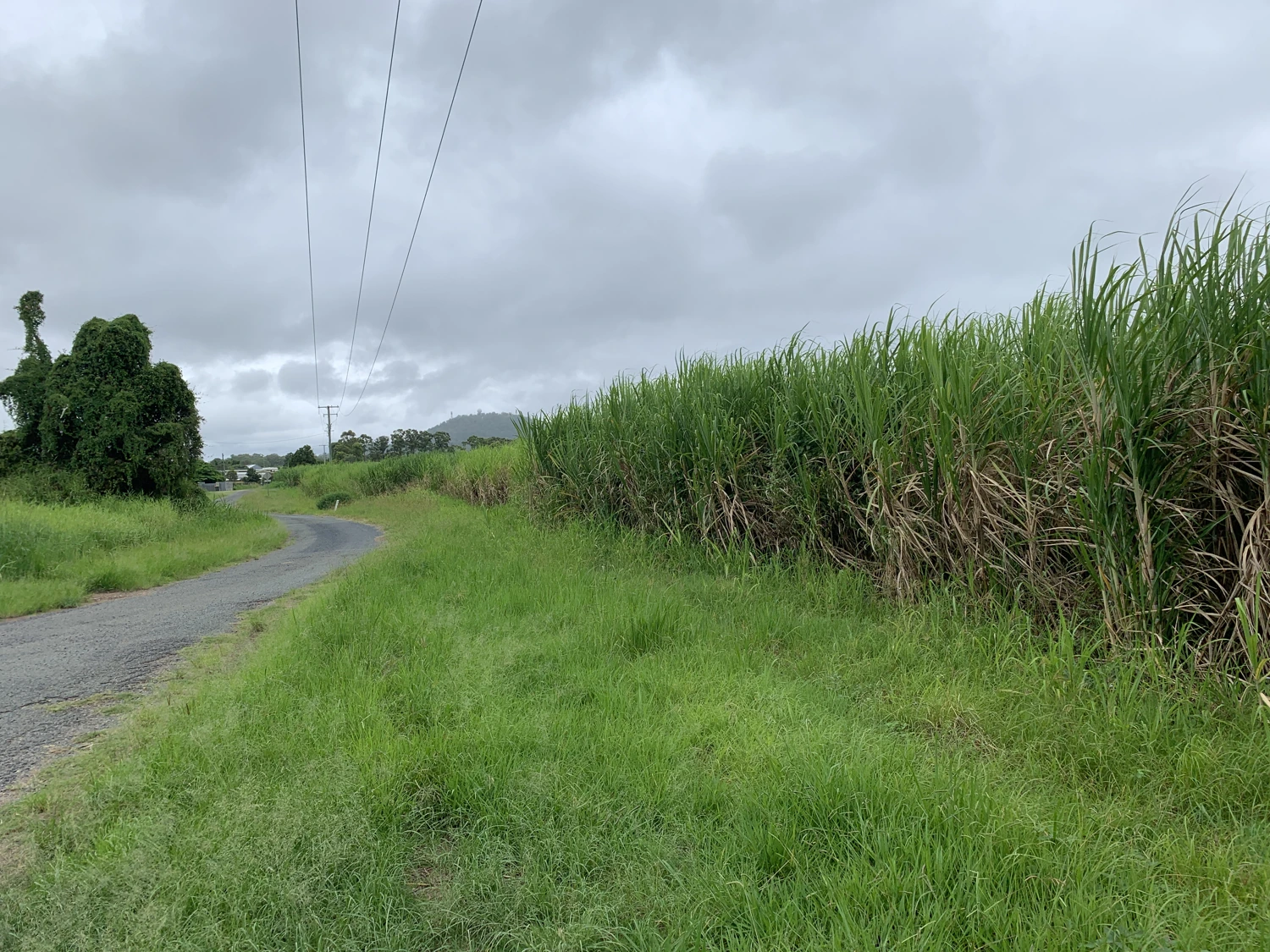
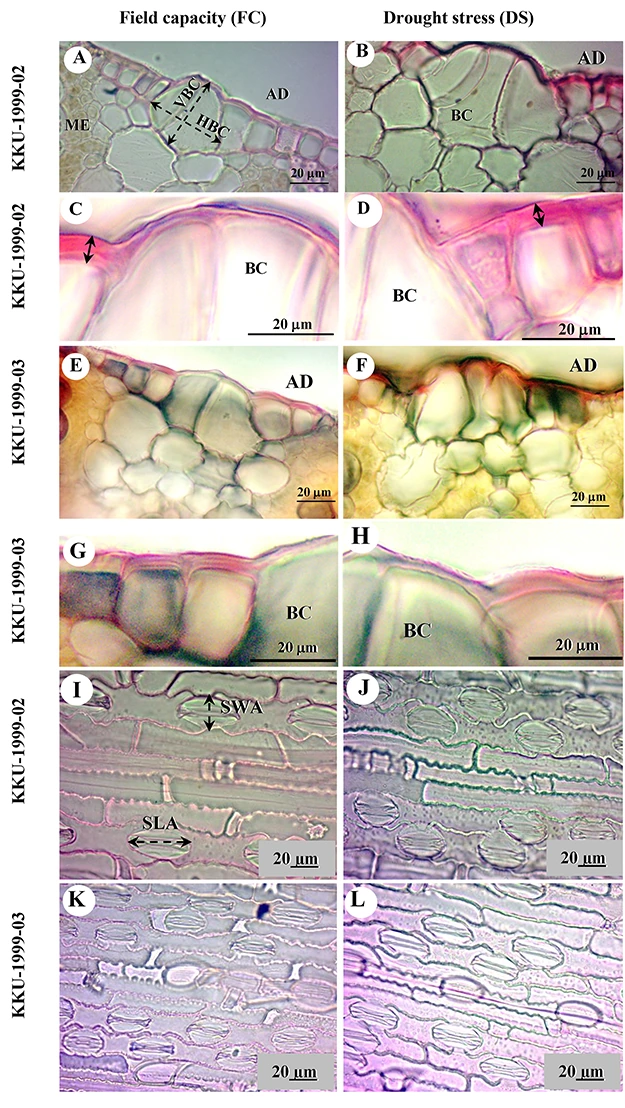
在本章中,真实田间照片可以说明行列结构、蔗株分布及成熟冠层外观,真实显微图可以说明叶组织形态。 两者都不能凭单张影像提供干质量、呼吸损失或单位面积净生长率。 只有具有取样面积、称量记录、干燥过程和时间序列的原始试验,才可用于量化干物质形成。 所引图片保留真实作者、许可、源页、原图哈希和双语图注,禁止替换成AI生成图片。
A field photograph can document crop architecture and a micrograph can document anatomy. Neither yields dry mass, respiration loss or interval CGR without timed harvests, weights and area information. Authentic images are linked to creator, license, source, hash and bilingual captions. AI imagery is excluded from the evidence collection.
7.2 图片复用与独立研究计数
7.2 Media reuse versus independent evidence
本章沿用前章已取得并核验的澳大利亚甘蔗田照片及甘蔗叶表皮显微图,文件通过SHA-256逐字节核对。 它们分别用于群体形态与组织结构的示例,但不作为S01至S09任何一项试验的田间观测。 “两幅图”不能算成“两次研究验证”,更不等于两次干物质测定。
This chapter reuses a verified Australian field photograph and real sugarcane leaf micrographs already embedded in an earlier chapter, checking their SHA-256 byte hashes. They illustrate canopy and tissue structure rather than samples from any of the S01–S09 field trials. Two images are not two independent tests of biomass response.
7.3 尚未取得的真实影像缺口
7.3 Missing authentic media
优先缺口为:同一田块按取样日期记录的分器官称重连续照片、具有标尺和节位信息的整秆切段照片、配套烘干前后质量表的原始研究照片,以及分别标记新植和宿根的小区图片。 本章对一张Wikimedia公开许可田间原图进行一次下载,失败后立即停止;它仅保留为线索,不计入已取得图像,亦不在正文中引用为已实际获得的图版。
Priority gaps include time-stamped destructive-harvest photographs linked to organ weights, scale-marked stalk segments, documented oven-drying pairs and identified plant/ratoon plots. One separately licensed Commons original was attempted once but not obtained. It remains a lead, not an acquired figure or a scientific observation.
网页预览经过缩放或格式转换,未裁切;原比例尺与标签保留。 / Web preview resized or re-encoded without cropping; original scales and labels retained.
图1 / Fig. 1|澳大利亚Alberton真实甘蔗田 / Authentic field in Alberton, Australia. 摄影 / Photo: Kerry Raymond (2022-01-26); CC BY 4.0. 非干物质测量 / Not a biomass measurement.
网页预览经过缩放或格式转换,未裁切;原比例尺与标签保留。 / Web preview resized or re-encoded without cropping; original scales and labels retained.
图2 / Fig. 2|甘蔗叶表皮与叶缘显微图 / Authentic sugarcane leaf micrographs, original 20 µm scale bars. Taratima et al. (2021), CC BY 4.0; 形态证据,不是生物量测量 / anatomy only.
表5/Table 5|图像权属与证据作用 / Media evidence limits
图/Figure | 实际来源/Source | 可观察/Supports | 不能证明/Cannot establish |
|---|---|---|---|
图1 / Fig. 1 | Kerry Raymond (2022), CC BY 4.0 | 田间群体外观 / field architecture | 干质量或CGR / measured dry biomass |
图2 / Fig. 2 | Taratima et al. (2021), CC BY 4.0 | 叶表皮结构 / leaf anatomy | 截光效率 / canopy RUE |
候选图 / unacquired lead | Kerry Raymond (2022), CC BY 4.0 | 公开来源已确认 / source verified | 未取得原图,不能入库 / not downloaded |
八、适用边界、研究空白与后续衔接
8. Transfer boundaries, gaps and chapter links
8.1 地区、品种与收获用途
8.1 Region, genotype and harvest objective
田间积累干物质量与可收获鲜蔗量是不同的生产指标。 世界甘蔗既有糖用、能源用、食用,也有高纤维生物量用途;同一材料的“优势”可能在生长第8个月和第12个月不同。 澳大利亚热带长生长季、印度季风区、巴西宿根耕作和南非高纤维材料的数值,应以地点、土壤、季节、作物类别与收获用途作为联合适用边界,不进行未经测试的直接跨国转换。 [S01–S06]
Accumulated dry matter and harvestable fresh cane measure different outcomes. Sugar, biomass and energy cane types may switch rank between months eight and twelve or between plant and ratoon cycles. Transfer of Australian, Indian, Brazilian or South African estimates must preserve soil, climate, season, crop class, cultivar and harvest objective. Direct country-to-country conversion without validation is unjustified [S01–S06].
8.2 尚不能回答的关键机制问题
8.2 Mechanistic questions not yet resolved
现有可核读摘要往往缺少原始随机化、全株根系与落叶、气室独立数、分析代码或每小区干物质时间序列。 由此仍不能可靠分离:晚期增长下降中倒伏、叶氮下降及植株衰老的相对因果贡献;宿根早期生长中蔗蔸储藏物与新光合碳的比例;特定烘干协议对可溶性糖测值的影响。 研究台账对这些问题保留“待核验”,不把机理假说变成定论。
Accessible abstracts commonly omit randomization details, root and litter pools, independent chamber counts, analysis code or plot-level time series. Consequently the relative causal roles of lodging, leaf nitrogen and ageing in late growth decline remain unsettled; so do reserve versus current-assimilation contributions in early ratoons and some drying-protocol biases. These are documented gaps, not established conclusions.
8.3 数据库最低记录结构
8.3 Minimum database records
每个数值都应关联:研究ID、DOI、同一原试验ID、处理ID、日期、地点、作物类别、品种、器官、是否计凋落物、面积、鲜质量、干质量、取样重复、统计单位、辐射口径、测量方法、引用定位、权限和证据等级。 独立原始观测、发表汇总统计、设计参数、图形数字化与教学演示分别编码。 此结构允许以后纳入新增研究而不破坏001—180章编号。
Every numeric datum should link to study ID, DOI, original experiment ID, treatment, date, site, crop class, genotype, organ, litter inclusion, area, fresh and dry weights, replication, statistical unit, radiation basis, method, precise citation location, access rights and claim-specific confidence. Raw observations, published aggregates, design parameters, figure digitization and didactic examples are distinct categories.
8.4 与下一章节的逻辑接口
8.4 Interface with subsequent chapters
本章建立“测量生长”的质量守恒和尺度框架;后续讨论叶片同化、分蘖生灭、茎节伸长、成熟和糖分积累时,应反复引用这里的干质量、LAI、CGR与RUE定义。 尤其需要避免把“糖分浓度增加”“蔗秆鲜重增加”和“每公顷可回收蔗糖总量增加”写成同一结论。 全书复核时应检查单位、来源以及跨章因果链是否闭合。
This chapter supplies mass-balance and scaling conventions for later treatment of leaf assimilation, tiller dynamics, internode growth, maturation and sucrose storage. Increased stalk sugar concentration, increased fresh cane weight and increased recoverable sugar mass per hectare must remain distinct outcomes. The whole-book review will audit units, source links and causal claims across chapters.
双语专业术语 / Bilingual glossary
表7 / Table 7|本章术语对照 / Terminology register
中文 / Chinese | English / 英文 |
|---|---|
干物质 | Dry matter |
鲜质量 | Fresh mass |
干物质率 | Dry matter fraction |
含水率(湿基) | Moisture fraction (wet basis) |
立地生物量 | Standing biomass |
地上部生物量 | Above-ground biomass |
地下部生物量 | Below-ground biomass |
作物生长率 | Crop growth rate, CGR |
相对生长率 | Relative growth rate, RGR |
净同化率 | Net assimilation rate, NAR |
叶面积指数 | Leaf area index, LAI |
比叶面积 | Specific leaf area, SLA |
辐射利用效率 | Radiation use efficiency, RUE |
截获光合有效辐射 | Intercepted photosynthetically active radiation, IPAR |
短波辐射 | Shortwave radiation |
截光系数 | Light extinction coefficient |
器官分配 | Organ partitioning |
源库关系 | Source–sink relationship |
净增长量 | Net increment |
破坏性取样 | Destructive sampling |
亚样本 | Subsample |
独立试验单位 | Independent experimental unit |
重复观测 | Repeated measures |
凋落物 | Litter |
枯叶层 | Trash layer |
宿根蔗 | Ratoon cane |
新植蔗 | Plant cane |
生物量平台期 | Biomass plateau |
生长减缓现象 | Reduced-growth phenomenon |
测量边界 | Measurement boundary |
研究重分析 | Secondary analysis of original experiments |
数字化图表数值 | Figure-digitized datum |
原始文献与证据访问说明 / Primary references and access notes
本章核查以出版方正式摘要、机构存档的作者摘要和明确标注的索引摘要为基础;未取得的完整方法与逐小区数据不宣称已核读。 下列S01—S09为本章单一来源编号,跨论文复用数据不另计独立实验。
Sources include primary-publisher abstracts, an institutional author abstract and explicitly marked index reproductions. Unavailable methods and plot-level data are not represented as fully read. S01–S09 identify papers, not necessarily independent original experiments.
[S01] Muchow, R.C.; Spillman, M.F.; Wood, A.W.; Thomas, M.R. (1994). Radiation interception and biomass accumulation in a sugarcane crop grown under irrigated tropical conditions. Australian Journal of Agricultural Research 45(1):37–49. DOI: 10.1071/AR9940037; https://affiliate.eurekamag.com/research/002/473/002473103.php
访问层级 / Read level: SECONDARY_INDEXED_AUTHOR_ABSTRACT. 限制 / Limit: Secondary reproduction of abstract; no full Methods, raw observations or uncertainty estimates
[S02] Robertson, M.J.; Wood, A.W.; Muchow, R.C. (1996). Growth of sugarcane under high input conditions in tropical Australia. I. Radiation use, biomass accumulation and partitioning. Field Crops Research 48(1):11–25. DOI: 10.1016/0378-4290(96)00041-X; https://agris.fao.org/search/en/providers/123819/records/6473617e53aa8c89630b28f9
访问层级 / Read level: FAO_AGRIS_BIBLIOGRAPHIC_AND_INDEXED_ABSTRACT. 限制 / Limit: Original paper full text not inspected; early ratoon finding should not be overgeneralized
[S03] Park, S.E.; Robertson, M.; Inman-Bamber, N.G. (2005). Decline in the growth of a sugarcane crop with age under high input conditions. Field Crops Research 92(2–3):305–320. DOI: 10.1016/j.fcr.2005.01.025; https://research-portal.uea.ac.uk/en/publications/decline-in-the-growth-of-a-sugarcane-crop-with-age-under-high-inp/
访问层级 / Read level: INSTITUTIONAL_AUTHOR_ABSTRACT. 限制 / Limit: Reanalysis likely overlaps pre-2005 literature; do not add as independent replication of reused data
[S04] Shih, S.F.; Gascho, G.J. (1980). Relationships Among Stalk Length, Leaf Area, and Dry Biomass of Sugarcane. Agronomy Journal 72(2):309–313. DOI: 10.2134/agronj1980.00021962007200020014x; https://acsess.onlinelibrary.wiley.com/doi/abs/10.2134/agronj1980.00021962007200020014x
访问层级 / Read level: PUBLISHER_ABSTRACT_INDEX_VERIFIED. 限制 / Limit: Historical empirical relationships not universal mechanistic conversion functions
[S05] Dhansu, P.; Nandwal, A.S.; Kumar, S.; Chand, M.; Rani, B.; Kulshreshtha, N. (2022). Comparative evaluation of growth, yield and yield attributing traits in sugarcane under different soil moisture regimes. Indian Journal of Agricultural Sciences 92(8):942–946. DOI: 10.56093/ijas.v92i8.90437; https://epubs.icar.org.in/index.php/IJAgS/article/view/90437
访问层级 / Read level: PUBLISHER_FULL_ABSTRACT. 限制 / Limit: Cane and sugar yield effects from 2-season site-specific summary; percentage interpretation should be checked against PDF
[S06] Olivier, F.C.; Singels, A.; Eksteen, A.B. (2016). Water and radiation use efficiency of sugarcane for bioethanol production in South Africa, benchmarked against other selected crops. South African Journal of Plant and Soil 33(1):1–11. DOI: 10.1080/02571862.2015.1075231; https://nisc.com/products/abstracts/26695/water-and-radiation-use-efficiency-of-sugarcane-for-bioethanol-production-in-south-africa-benchmarked-against-other-selected-crops
访问层级 / Read level: JOURNAL_INDEX_ABSTRACT. 限制 / Limit: Reported theoretical ethanol yields are modeled—not measured ethanol production
[S07] MacColl, D. (1977). Growth and Sugar Accumulation of Sugarcane. II. Dry Weight Increments and Estimates of Assimilation Rate. Experimental Agriculture 13(1):61–69. DOI: 10.1017/S0014479700007614; https://www.cambridge.org/core/journals/experimental-agriculture/article/abs/growth-and-sugar-accumulation-of-sugarcane-ii-dry-weight-increments-and-estimates-of-assimilation-rate/8CBCB9D63D83D7111DB844E09ADB66C9
访问层级 / Read level: PUBLISHER_ABSTRACT. 限制 / Limit: Do not confuse fibre or sucrose increments with whole-organ dry-mass gain
[S08] Grof, C.P.L.; Campbell, J.A.; Kravchuk, O.; Lambrides, C.J.; Albertson, P.L. (2010). Temperature effect on carbon partitioning in two commercial cultivars of sugarcane. Functional Plant Biology. DOI: 10.1071/FP09216; https://doi.org/10.1071/FP09216
访问层级 / Read level: PUBLISHER_FULL_ABSTRACT. 限制 / Limit: Author list verified from publisher; chamber replication not visible in abstract; controlled-environment rates cannot be generalized to field
[S09] Fortes, C.; Trivelin, P.C.O.; Vitti, A.C.; Otto, R.; Franco, H.C.J.; Faroni, C.E. (2013). Stalk and sucrose yield in response to nitrogen fertilization of sugarcane under reduced tillage. Pesquisa Agropecuária Brasileira 48(1):88–96. DOI: 10.1590/S1678-3921.pab2013.v48.11268; https://apct.sede.embrapa.br/pab/en/article/view/11268
访问层级 / Read level: PUBLISHER_FULL_ABSTRACT. 限制 / Limit: Avoid interpreting stalk fresh mass response as dry-mass gain without direct harvest moisture data
编辑与版权声明 / Editorial and rights notice
本章文字为新写的综合性学术说明,来源事实逐项溯源;不转录未经授权的论文全文、表格或图像。 所用两幅真实图片均有明确出处与许可,并从前章已核验文件复用。 尚无逐株原始数据下载或再分析。 所有具体数字在数据库按“试验设计参数”或“发表摘要汇总”登记,而非“原始观测”。
This is an original synthesis with claim-level provenance rather than a reproduction of copyrighted papers. Two real images are reused with verified rights. No plot-level raw observations were acquired or reanalysed. Published summary results and experimental design values remain separate in the evidence database.