Chapter 011 — Physiological Interpretation of Genotype, Environment and Management Interactions
章节编号 / ID: SUG-PHY-V01-C011 | 研究版 R1 | 编写日期 2026-11-09 | 双语初稿与首轮证据核查 / bilingual draft and initial review
编写边界:本章不是肥料处方或品种推广公告;表内数值均为注明研究场景的原始论文已发表设计参数或汇总结果。 / Scope: this chapter is not a fertilizer prescription or cultivar release notice. All numbers are reported study designs or published summaries within a named context.
本章研究问题 / Core question
哪些过程可以解释同一品种在不同环境和管理条件下的表现变化? Which processes can explain changes in the performance of a genotype across environments and management conditions?
一页导览 / Research at a glance
比较维度 / Factor | 观测对象 / What must be observed | 不能误判为 / Not equivalent to |
|---|---|---|
G 基因型 | 品种、遗传背景、芽段批次 / genotype and sett lineage | 跨年份最优品种 / universally best genotype |
E 环境 | 地点、土壤、季节、天气、蔗作周期 / site, soil, season, climate, crop cycle | 仅国家名称 / country tag alone |
M 管理 | 水氮强度、日期、密度及实际暴露 / treatment dose, time and realized exposure | 处理名称 / treatment label alone |
G×E×M | 分层随机化的差异响应及其机制 / replicated interaction and mediators | 单点相关或图形分组 / a correlation or biplot by itself |
一、研究对象、问题与可检验假说
I. Research Object, Questions and Testable Hypotheses
1.1 从“哪一个品种最好”转向“为什么在这里表现最好”
1.1 From universal winners to conditional performance
甘蔗的基因型(G)决定潜在的叶片构造、茎秆伸长能力、根系配置和蔗糖积累特征;环境(E)包括温度、辐射、降雨、土壤、病虫压力和新植或宿根周期;管理(M)包括水肥投入、种植密度、收获年龄和残叶处理。 产量或糖分品质是三者共同作用后的表型。 把单个田块的“最佳品种”直接推广到其他气候、土壤或宿根年限,忽略了可重复的互作证据。 本章关心的不是简单排名,而是同一材料在何种环境与管理组合下改变了哪一条生理链。 [S01–S03]
English
Genotype (G) shapes potential leaf architecture, stem elongation, root distribution and sucrose storage. Environment (E) comprises weather, soil, biotic pressures and the plant-versus-ratoon context; management (M) includes water, nutrients, stand density and harvesting decisions. A yield or quality observation is a conditional phenotype, not an intrinsic variety label. This chapter asks which physiological process changes when a known genotype encounters a specified environment and management combination, rather than proclaiming a universal winner. [S01–S03]
1.2 主效应、数量互作与交叉互作
1.2 Main effects, non-crossover and crossover interactions
两品种在两个地点都同比例减产,可能是共同环境主效应;若两品种减产幅度不同,即使名次不变,也可能存在数量互作;若名次反转,则为交叉互作。 判别需要有误差估计的品种×地点或品种×处理对比,而不是仅看两条折线是否交叉。 对多地点、不同宿根年度的混合模型,应先明确“环境”由哪些层级组合组成,再讨论显著性与可解释的效应量。 AMMI、GGE图可以总结排名结构,但不能直接确定生理因果。 [S01,S02,S07]
English
A common reduction in all genotypes may mainly reflect an environmental main effect. Unequal changes may constitute non-crossover interaction even if ranks persist; rank reversal creates a crossover interaction. Formal inference requires replicated genotype-by-environment or genotype-by-treatment contrasts and uncertainty, not visual inspection alone. AMMI and GGE can summarize interaction patterns, but a biplot is not a causal physiological assay. [S01,S02,S07]
1.3 预注册三个机制假说
1.3 Three testable mechanistic hypotheses
假说H1:水分受限时,根系可探索土体、气孔导度和叶面积变化对不同基因型的减产程度具有差异性解释力;H2:氮素处理对单叶光合作用、冠层叶面积和最终干物质的影响不应被假定相等;H3:收获季节与宿根周期可改变可回收糖率和产量性状排序。 各假说均应在独立小区中采集连续水势、同化、茎数、节间生长、蔗糖及收获数据,并以重复地点和年度验证。 这里的“解释力”是待检验关系而不是既有因果结论。 [S01,S03,S04,S06]
English
H1 predicts that root exploration, stomatal conductance and canopy area partly explain genotype-specific water responses. H2 predicts that nitrogen responses of instantaneous leaf assimilation, canopy size and final biomass need not align. H3 predicts that season and ratoon cycle can alter rankings for cane versus recoverable sucrose. Each hypothesis requires randomized plots, longitudinal covariates and independent site-year validation; none is claimed as a proven mediation model by the cited trials alone. [S01,S03,S04,S06]
二、结构、功能与互作机制链
II. Structure, Function and Interaction Mechanisms
2.1 水分供给—根系—气孔—冠层链
2.1 Water supply–roots–stomata–canopy pathway
根际水势下降先改变根部可提取水量与输水阻力,叶片通过气孔开闭调控蒸腾和CO₂扩散,同时影响光合电子传递和细胞膨压。 甘蔗单叶净同化降低并不等于最终蔗产量按同一比例降低,因为植株还能改变叶面积、根冠比、分蘖存活和既有茎秆的生长分配。 Marchiori等在35天根箱试验中指出,两品种对不同水分强度的生理可塑性和形态可塑性排序并不相同;该结果属于幼株可控环境证据,不能直接替代成熟田间宿根表现。 [S06]
English
A declining soil matric potential changes accessible water and hydraulic resistance. Stomatal control then modulates transpiration and CO₂ diffusion, while photochemistry, cell turgor and expansion may also shift. Declines in instantaneous leaf assimilation do not scale mechanically to equal percentage loss of harvested cane: leaf area, roots, surviving stalks and biomass allocation intervene. The 35-day rhizotron study documents contrasting plasticity strategies between two cultivars, but it does not validate mature ratoon field performance. [S06]
2.2 氮素—叶龄—光合能力—生长分配链
2.2 Nitrogen–leaf development–photosynthesis–allocation pathway
氮素既参与Rubisco和PEPC相关光合同化体系,也影响叶片生长、老化和蛋白质再分配。 不同品种在低氮和高氮条件下的叶片基部、中部、尖端代谢状态并不一致,说明同一张叶片内的组织发育位置是理解G×N的重要协变量。 佛罗里达砂土盆栽研究显示,升氮对绿叶面积和地上部干物质的效应比对单叶瞬时Pn更一致;因此不能把某次Pn测量当作施氮增产的全部机理。 [S04,S05]
English
Nitrogen supports carbon assimilation machinery and leaf construction, while shaping senescence and remobilization. Contrasting nitrogen-responsive genotypes show distinct PEPC activity, soluble sugars and metabolite distributions along leaf-base, middle and tip regions. In a Florida sand-soil pot study, leaf area and biomass responded more consistently to nitrogen than did one-time leaf Pn. Thus one leaf reading cannot substitute for canopy development and time-integrated carbon gain. [S04,S05]
2.3 源—库关系与蔗糖积累的边界
2.3 Source–sink relationships and sugar-yield boundaries
蔗糖积累取决于源叶片净碳输入、韧皮部运输、节间卸载及贮藏薄壁组织扩张。 若高氮使冠层持续生长,即便鲜蔗产量上升,糖分浓度或可回收糖率也不必同步提升。 墨西哥Mex 79-431第二宿根试验的90 kg N/ha处理获得所报告最高净光合速率,而120 kg N/ha处理的蔗产量最高;这说明两个指标的极值可能不一致,但不能据此推断氮素普遍应施120 kg/ha。 [S08]
English
Sucrose accumulation reflects source assimilation, transport, unloading and storage in maturing internodes. A large canopy can support greater cane biomass without necessarily raising sugar concentration or recoverable sugar. In one second-ratoon Mexican trial, the highest reported leaf photosynthesis occurred at 90 kg N/ha whereas highest harvested cane yield occurred at 120 kg N/ha. The endpoint mismatch is informative but cannot define a globally optimal rate. [S08]
2.4 管理既是处理变量,也是环境的调节器
2.4 Management modifies the environment rather than acting independently
灌溉改变根区含水和冠层温湿度,施肥可能改变冠层郁闭速度及作物耗水,种植密度影响叶片光环境和单茎竞争。 实际试验中,M的效果取决于实施时点、剂量及作物阶段,甚至“半灌溉”在降雨年份与干旱年份的实际亏缺不一样。 因此记录管理时应同时提供土壤水分、降雨和肥料有效性证据,不能只记录开阀次数或施肥公斤数。 [S01,S04,S11]
English
Irrigation alters root-zone water availability and crop microclimate; fertilization may accelerate canopy closure and water demand, and spacing changes light competition. The same nominal management treatment can generate different realized stresses across rainfall years. Record soil moisture, weather and nutrient status alongside application dose and timing. A treatment label is not a physiological exposure measurement. [S01,S04,S11]
机制示意(研究推断,并非原始实验图片) / Mechanism map (analytical hypothesis, not a field photograph):
环境或管理 / Exposure | 中间生理环节 / Physiological intermediates | 产量端点 / Outcome |
|---|---|---|
水分 / Water | 根区水势→气孔与叶面积 / soil potential → stomata and LAI | 有效茎与干物质 / stalk survival and dry matter |
氮素 / Nitrogen | 叶片氮分配→叶龄梯度与冠层 / leaf N → blade gradient and canopy | 鲜蔗量与糖品质 / cane biomass and sugar quality |
季节 / Season | 积温、辐射、成熟转换 / thermal time, radiation, ripening | 蔗糖率及可回收糖 / sucrose and recoverable sugar |
三、生育阶段、季节及宿根的环境分解
III. Stage, Season and Ratoon Decomposition
3.1 新植、第一宿根和第二宿根不可混写
3.1 Plant cane and ratoons are distinct crop cycles
同一基因型在新植蔗、第一宿根和第二宿根中所处的根系状态、残存芽数量、株丛结构和土壤病虫背景可能不同。 澳大利亚试验把地点、蔗作年度和灌溉三个因子交叉,原计划27个环境单元;受2011年Yasi气旋影响,Dalbeg第一宿根三个处理被排除,最终分析24个环境单元。 这个例子说明极端事件必须明确记为缺测或排除,不能当作均匀的年度环境效应。 [S01]
English
Plant cane, first ratoon and second ratoon differ in carry-over root systems, stools, bud reserves and site history. The Queensland experiment originally defined 27 location × crop-year × irrigation combinations, but excluded three cyclone-affected Dalbeg first-ratoon environments, leaving 24 analysed combinations. Extreme events must be documented as exclusions or explicit covariates rather than silently pooled into an average crop-year effect. [S01]
3.2 季节差异不限于一个天气变量
3.2 Season is a bundle, not a single weather variable
不同季节的日照长度、温度、辐射、空气干燥度、土壤湿度和收获龄可能同时变化。 南非Mpumalanga与Pongola灌溉区的多年试验发现季节及基因型×季节对蔗产和蔗糖指标的重要性高于对应的地点成分,且早晚季在蔗量与蔗糖含量上呈不同方向。 它支持建立季节分层试验,并不证明单一光周期或气温是唯一驱动因素。 [S03]
English
Season jointly changes radiation, temperature, photoperiod, evaporative demand, soil conditions and age-at-harvest. Multi-year irrigated trials in Mpumalanga and Pongola found season-related effects and G × season components important for cane and sucrose traits. This justifies seasonal stratification; it cannot isolate daylength or heat as the unique driver without additional contrasts. [S03]
3.3 试验的环境定义决定推断半径
3.3 The declared environment determines inference radius
2026年印度Erode研究在单地点追踪不同新植与宿根周期并比较19个基因型,其“环境”主要由蔗作周期和年度构成。 其AMMI结果可以说明该点的时序稳定性,但由于没有第二地理地点,不应把结论表述为跨生态区稳定。 与此相反,佛罗里达五地点和澳大利亚三地点试验能检验地点差异,但并不能自动识别哪一种环境因子在驱动排序。 [S01,S02,S09]
English
An Erode study published in 2026 assessed 19 genotypes with crop cycles at one geographic location; its AMMI environments capture cycle/year differences, not geographical transferability. Florida five-site and Queensland three-site datasets allow spatial comparisons, but an observed location contrast does not identify soil, water or temperature causality by itself. Always state which dimensions were truly replicated. [S01,S02,S09]
四、品种、地区与跨环境稳健性
IV. Cultivars, Regions and Robustness
4.1 高均值与稳定性是不同的决策维度
4.1 Mean performance and stability are separate objectives
品种A在所有环境平均产量高,但对极低水分条件反应强;品种B平均稍低却在缺水环境排名上升。 两者不一定存在谁绝对“优良”。 佛罗里达有机土五地点试验识别两个优势环境群,且CP 12-1417在该研究集合内兼有较高均值与稳定性;该排名仅服务于所测地点、材料与蔗作周期。 独立验证应在目标生产环境之外保留外部地点或后续年份。 [S02]
English
A genotype with high overall mean can also be vulnerable to a particular low-input environment; another genotype may trade some mean performance for lower rank variance. In the Florida muck-soil trials, the AMMI/GGE analysis partitioned five locations into two mega-environments and ranked CP 12-1417 favourably within the evaluated material. This is a trial-specific inference, not a universal variety recommendation. [S02]
4.2 砂土、泥炭土和降雨型生态区不可强行合并
4.2 Sand, organic soils and rainfed regions are not interchangeable
佛罗里达砂土研究与有机土多环境试验虽然都在同一州,根区保水、氮素供给和管理背景却不同。 来自砂土盆栽的氮素响应不能作为有机土大面积施氮标准,更不能无试验条件地转移到澳大利亚或南非。 建议将生态区拆分为土壤质地与有机质、可排水性、年内雨型、温度、灌溉能力及宿根制度六类可测协变量,而不是只有国家名称。 [S02,S04,S10]
English
Florida sand and muck soils differ markedly in water retention and nutrient cycling despite sharing a state. Pot-based sand-soil nitrogen responses cannot set field rates for organic soils or other continents. Define target environments by measured soil, drainage, rainfall seasonality, thermal regime, irrigation access and ratooning practice—not only country labels. [S02,S04,S10]
4.3 生理耐受与产量稳健性不能相互代用
4.3 Physiological tolerance and statistical stability are not synonyms
在马哈拉施特拉四地点两次新植及一次宿根缺水试验中,Co 85019表现为高产且统计稳定。 文章也报告了不同基因型在分蘖期缺水下的差异;但一个AMMI稳定性指数本身不揭示气孔、水势、根系深度等机制,更不能把某品种命名为普适“抗旱保证品种”。 若要说明生理耐旱,应额外以分期气体交换、叶水势、根长密度与恢复动力学验证。 [S07]
English
In Maharashtra trials across four sites, two plant trials and one ratoon trial, Co 85019 was among the high-yielding statistically stable entries under imposed tillering water withdrawal. AMMI stability does not identify stomatal, hydraulic or root mechanisms. Physiology-based drought tolerance requires additional staged measurements and independent tests; the source authors’ enthusiastic descriptor must not become an unconditional claim. [S07]
五、原始试验、矛盾结果与证据解释
V. Primary Experiments, Contrasts and Conflicting Evidence
5.1 为什么“灌溉增产明显”与“G×灌溉很小”并不冲突
5.1 A strong irrigation main effect may coexist with weak G×irrigation
Natarajan等对24个有效环境单元分析发现,雨养平均减产32%,半灌溉平均减产9%,但基因型×灌溉方差相对较小。 这意味着灌溉对群体产量具有较强平均效应,却未必大幅改变品种相对排序;地点和宿根周期仍可能主导部分排序变化。 少数低产潜力环境出现显著的基因型×地点×灌溉互作,因此也不能宣称品种对缺水响应完全一致。 [S01]
English
The Queensland trial reported 32% lower average cane yield under rainfed conditions and 9% lower under semi-irrigation, yet genotype-by-irrigation variance was comparatively small. A strong treatment main effect can coexist with limited reshuffling of genotype rankings. Significant three-way genotype × location × irrigation effects occurred in lower-yielding contexts, so neither “water never matters for selection” nor “all cultivars respond differently” is supported. [S01]
5.2 相反证据:土壤、水分强度和阶段改变结果
5.2 Contrasts across soil, stress intensity and stage
巴西两品种根箱研究中,IACSP95-5000在高水和中等亏缺下保持较高同化与生物量,但在强水分亏缺下净光合下降显著;IACSP94-2094形态可塑性较高,生物量却不一定更高。 与田间多环境统计结果相比较,不应强求“生理可塑性越大→产量越稳”的线性通则,因为研究的幼苗时段、响应变量和压力强度不同。 这属于可并存的互补证据,不是要将两个研究平均成一个结论。 [S01,S06]
English
In rhizotrons IACSP95-5000 maintained relatively strong assimilation and biomass under favourable or moderate conditions but experienced a steep decline under severe deficit; IACSP94-2094 showed greater morphological plasticity without always achieving greater biomass. A juvenile physiological response cannot be directly averaged with a multi-year field yield interaction. These are compatible yet differently scoped evidence streams, not a single universal plasticity–stability rule. [S01,S06]
5.3 管理的交互:氮与干旱不是可独立叠加的两个效果
5.3 Nitrogen and drought effects need not add linearly
水分亏缺限制气孔开放与生长,将改变作物对增氮的利用能力。 盆栽水分×氮素试验报告,较高氮量在灌水条件下促进净光合,但在干旱条件下部分差异不再显著。 它是水×氮交互的例子,却不能作为G×水×氮的证据,除非原试验确实跨多个基因型并给出适当交互检验。 本章把缺少的因子明确标注,而非把所有交互都称为“品种适应”。 [S11]
English
Water deficit can constrain the benefit of additional nitrogen through stomatal and growth limitation. A pot water-by-N study observed weakened photosynthetic separation among higher N treatments under drought. This demonstrates a treatment-context issue but not a genotype × water × N interaction unless several genotypes and a full interaction test were present. Missing factors must remain missing rather than rhetorically added. [S11]
5.4 试验台账:独立研究与共用数据不能重复记数
5.4 Evidence provenance and reuse rules
全文可读、只有摘要、相同论文的PMC镜像、发表的图表、以及供下载的逐小区数据是不同等级的资料。 每条主张都记录原始论文ID、具体方法或结果位置、样本独立单位和适用边界。 Natarajan研究的24环境及其多个分析图来自同一田间试验;增加图数或重复索引不会新增独立试验数。 2026年单点研究与2009—2011年南非试验是不同资料,但不能仅凭研究篇数等于独立生态区总数。 [S01,S03,S09]
English
Full HTML, abstract-only records, mirrors, publication figures and downloadable plot data are different evidence types. Count DOI-deduplicated articles separately from underlying experiments, environmental cells, randomized plots and images. Multiple biplots from one Queensland trial share a primary experimental dataset and do not form independent replication. Similarly, the 2026 single-site series must not be counted as several geographic locations. [S01,S03,S09]
原始研究对照表 / Contrasting original experiments
研究 / Study | 独立试验单位与处理 / Design | 观察与限制 / Findings & limits |
|---|---|---|
[S01] Australia 2020 | 10 genotypes; 3 sites; 24 valid site×cycle×irrigation cells; RCBD 3 plots | Rainfed −32%, semi −9%; G×irrigation relatively small, G×location/cycle larger |
[S02] Florida 2021 | 16 entries; 5 muck-soil sites; 3 cycles; 6 blocks | GEI and two mega-environments; no accessible leaf mechanism |
[S03] South Africa 2019 | 2 locations; early/late seasons; 3 replicates | G×season important; irrigated trial scope |
[S04] Florida 2014 | 3 genotypes × 4 N rates; pots; 2 years | Leaf area and biomass rise with N more clearly than leaf Pn |
[S06] Brazil 2017 | 2 genotypes × 3 soil water regimes; 35 days; rhizotron | Plasticity strategies differ; cannot infer mature field yield |
[S07] India 2021 | 16 genotypes; 4 sites; 2 plant +1 ratoon; 2 plot reps | GEI under tillering drought; AMMI stability is not causality |
[S08] Mexico 2020 | One cultivar, second ratoon, six N rates | Leaf Pn and yield peaks at different N doses |
[S09] India 2026 | 19 genotypes × 3 reps, single Erode site, crop cycles | Different stability by trait; no geographic replication |
六、指标、试验设计与数据库方法
VI. Indicators, Experimental Design and Database Methods
6.1 最小可重复试验设计
6.1 A minimally interpretable design
推荐在2个以上可辨识生态区进行至少两个独立年度的分层试验,以随机小区为统计单位。 可使用品种×灌溉×氮量因子设计;若灌溉只能作用于大区,则需要大区—小区或裂区随机化,统计中不能把小区重复当作大区自由度。 每个试验应登记品种来源、播种芽段批次、土壤初值、处理实施日期、灌溉实际水量、追肥时间、病虫控制、记录频率和出苗率。 上述为建议性设计,不是原文报告试验。 [S01,S04,S07]
English
A robust follow-up should span multiple defined target environments and independent years, with randomized plots as experimental units. Where irrigation is applied to a whole-plot stratum, use appropriate split-plot randomization and error terms; plant and repeated leaf readings remain subsamples. Register sett origin, initial soil conditions, realized treatment exposure, timing, pest management and repeated measurements. This is a recommended design, not a description of one cited experiment. [S01,S04,S07]
6.2 单叶、冠层、茎和糖的联合观测
6.2 Joint leaf, canopy, stalk and sucrose measurements
根区应测多层土壤体积含水率或水势;叶片应固定叶位、测量时段和气室条件记录A、gs、E、SPAD与叶温;群体定期测LAI、截光、NDVI、有效茎数和茎高;成熟期区分鲜重、干重、Brix、Pol、蔗糖含量和可回收糖率。 只有在同一小区、统一时间标尺且明确干物质与鲜质量单位后,才能连接“机制—产量”,否则变量间相关可能仅来自品种或日期差异。 [S04,S06,S08,S10]
English
Measure root-zone soil moisture or potential by depth; fix leaf rank, time and cuvette conditions for A, gs, E, SPAD and temperature; track LAI, intercepted radiation, NDVI, stalk population and elongation. At maturity distinguish fresh cane, dry matter, Brix, Pol, sucrose concentration and recoverable sugar. Matching plot identifiers, dates and mass bases is essential before relating mechanistic traits to yield. [S04,S06,S08,S10]
6.3 统计分解与因果解释
6.3 Variance decomposition is not causal identification
可写混合模型Y=μ+G+L+C+M+G×L+G×C+G×M+L×M+G×L×M+B(L,C)+ε,其中L为地点、C为作物周期、M为管理方案、B为区组;模型项的随机或固定属性随育种目标和试验设计而定。 对同一小区的多次叶片测量可叠加时点随机效应和时间自相关结构;对缺测的气旋年不得简单填零。 报告方差分量、置信区间、秩次稳定性和留地点/留年预测误差,不能只报告P值或绘制二维图。 [S01,S02,S07,S09]
English
An illustrative mixed model is Y = μ + G + L + C + M + G×L + G×C + G×M + L×M + G×L×M + block(L,C) + ε. Fixed versus random terms, covariance structure and repeated measures must follow randomization and the target inference population. Report effect sizes, interval estimates, stability rankings and leave-site/year-out predictive validation; never turn weather-induced missingness into zero yield. [S01,S02,S07,S09]
6.4 GAKI最小数据字典与来源规则
6.4 Minimum GAKI data dictionary and provenance policy
一行观测必须明确study_id、doi、site_id、season_id、crop_cycle、genotype_id、management_id、plot_id、sample_id、date、days_after_planting、variable、value、unit、method、uncertainty和access_status。 试验设计数值(如施氮量、重复数)与发表均值、从图中数字化的值、原始逐小区观测值分别标记,缺失值使用null加原因。 若两个论文重用相同试验,必须以data_reuse_group去重并登记来源版本;图像也要有独立权利与哈希链。 [S01–S11]
English
Every observation must record study, DOI, site, season, crop cycle, genotype, management, randomized plot, subsample, observation date, variable, unit, method and uncertainty. Distinguish design settings from published aggregates, figure-digitized values, true plot observations and derived reanalysis. Unknown fields are null with reason. Link paper versions and reused data through a common study group, not duplicated independent evidence. [S01–S11]
建议的数据字典 / Recommended structured fields
数据层 / Layer | 必要字段 / Required fields | 核查项 / Verification |
|---|---|---|
试验定位 / Study | study_id; doi; site_id; year; cycle | paper vs dataset vs plot duplication |
处理 / Treatment | genotype; water; N; dose; timing; realized exposure | randomized whole plot vs split plot |
观测 / Measurement | plot_id; sample_id; date; leaf_rank; unit; method | independence and sample size |
结果 / Response | A; gs; LAI; stalks; TCH; sugar_pct; recoverable_sugar | dry vs fresh mass; TCH vs TSH |
证据 / Evidence | source_locator; value_type; uncertainty; rights | abstract vs full text vs raw plot data |
七、真实影像证据与使用边界
VII. Authentic Image Evidence and Use Boundaries
7.1 田间照片的可证实范围
7.1 What a field photograph can actually establish
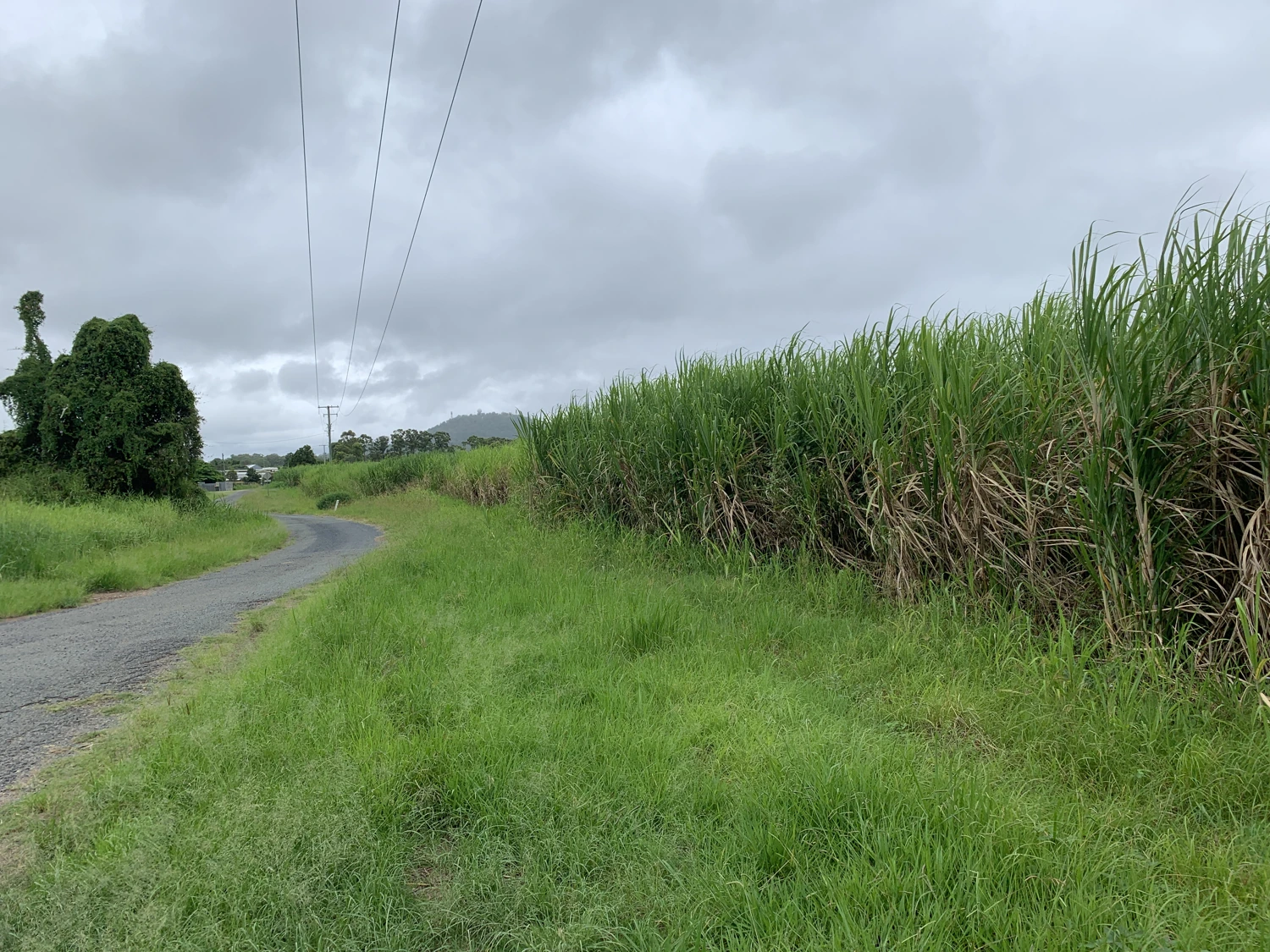
本章复用Kerry Raymond于2022年1月26日在澳大利亚Alberton附近拍摄的甘蔗田真实照片(CC BY 4.0)。 照片可以展示株群外观、冠层生长阶段与地面环境,却没有照片所摄品种、肥料处理或产量测定资料,因此严禁将其作为某个G×E试验的结果图。 原始图片SHA-256、许可与原文件ID保存在证据表内。 与第001章复用同一文件不应算作新取得图片。 [IMG01]
English
The authentic sugarcane field photograph by Kerry Raymond, dated 26 January 2022 near Alberton, Queensland, documents canopy appearance, not genotype identity, fertilizer regime, experimental treatment or harvested yield. Its CC BY 4.0 attribution and SHA-256 are retained; reuse is not new acquisition and the picture is never presented as a photographed plot from cited trials. [IMG01]
7.2 显微图属于结构证据而不是处理效果估计
7.2 Micrographs establish morphology, not treatment effects by themselves
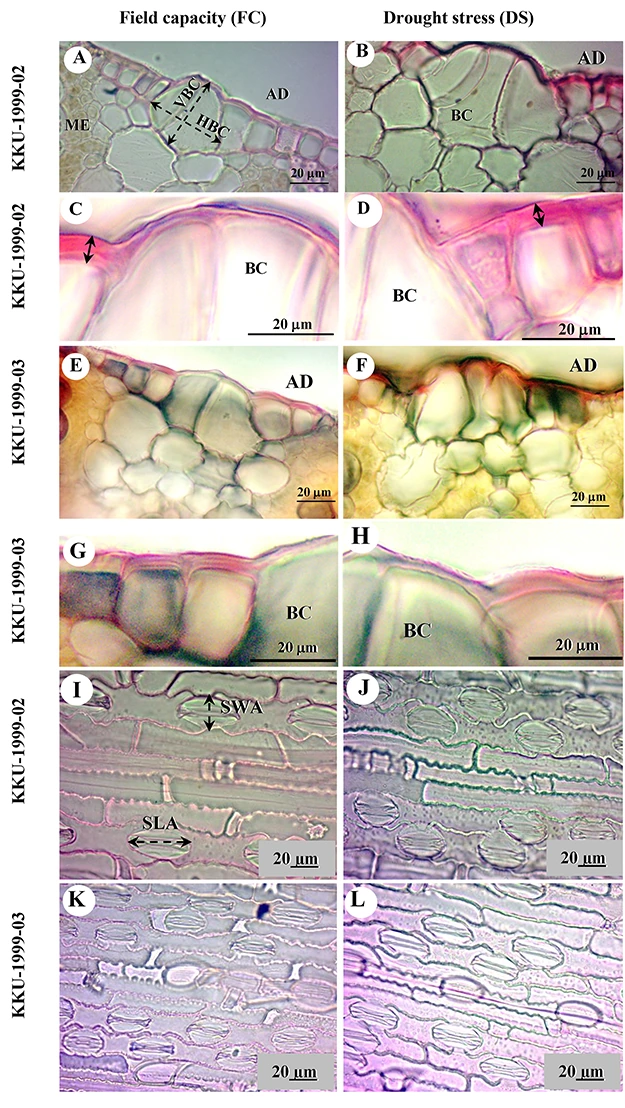
第二幅为Taratima等研究中已取得的甘蔗叶表皮显微图面板,带20 μm比例尺,真实显示气孔和表皮构造;它来自另一项特定干旱研究,不代表这里的澳大利亚、美国或印度G×E大田。 图中的不同处理面板应保留原图编号及解释,不能把显微形态直接等同于高糖品种或田间稳产能力。 未取得原件的候选照片不插入正文,也不计数。 [IMG02]
English
The reused Taratima et al. sugarcane epidermis plate, with 20 μm scale bars, provides documented anatomical context. It is from a separate drought/anatomy study and cannot be attributed to the cited multi-location trials or used as a direct estimate of yield stability. Original panel labeling, provenance and licensing remain attached. [IMG02]
真实图版一 / Authentic plate 1
网页预览经过缩放或格式转换,未裁切;原比例尺与标签保留。 / Web preview resized or re-encoded without cropping; original scales and labels retained.
图11-1 / Fig. 11-1 澳大利亚Alberton附近甘蔗田真实照片,Kerry Raymond,2022-01-26,CC BY 4.0。 仅用于群体形态背景,不能用于验证本章试验差异。 / Authentic field at Alberton, Queensland; contextual canopy evidence, not a photograph of trial plots. Original file reused; SHA-256 recorded. [IMG01]
真实图版二 / Authentic plate 2
网页预览经过缩放或格式转换,未裁切;原比例尺与标签保留。 / Web preview resized or re-encoded without cropping; original scales and labels retained.
图11-2 / Fig. 11-2 甘蔗叶表皮原发表显微图;原图保留面板及20 μm比例尺,Taratima等,2021,CC BY 4.0。 属于独立的器官结构研究,不能将其当作G×E田间产量数据。 / Original published sugarcane epidermis micrographs, source panel labels and 20 μm scale bars retained. Separate study, not field yield evidence. [IMG02]
八、适用边界、待证问题与下一章衔接
VIII. Transfer Boundaries, Open Questions and Cross-References
8.1 不能从统计互作直接宣称生理因果
8.1 Statistical interaction is not a mechanism
同一品种在不同地点表现不同,可能由水、氮、温度、土壤病原、农时与宿根年龄共同引起。 若没有直接水势、氮素吸收、气孔和碳分配测定,就不能认定差异必然来自“耐旱基因”或“高效光合作用”。 同理,单点多周期AMMI稳定性不支持跨国家推广,盆栽高氮效应不支持田间统一配方。 优先在已知变化的变量上设计干预,在独立地点进行机制验证。 [S01,S04,S06,S09]
English
A genotype’s site-dependent performance may integrate soil water, N, temperature, pathogens, planting date and ratoon age. Without measured water status, nutrient uptake, stomata and carbon partitioning, one cannot attribute GEI to a drought allele or superior photosynthesis. Single-site stability cannot justify geographic recommendations, and pot-based fertilizer responses cannot set universal field prescriptions. [S01,S04,S06,S09]
8.2 尚待证实的核心研究缺口
8.2 Outstanding research gaps
关键缺口包括:多地点共享的可下载逐小区原始数据;水—氮—品种全因子长期田间试验;分蘖期、伸长期和成熟期同小区生理—糖分的连续观测;土壤水分和氮有效性的空间测量;不同宿根年度相同株丛的持续跟踪;不同回收糖算法间的可比性。 对已获得论文的精确图表数字化和多地点预测误差也尚需核查。 本章把缺失列为研究任务,而不是用推测数值填补。 [S01–S11]
English
Major gaps include reusable plot-level data, fully factorial genotype × water × N field trials, time-aligned physiological and sugar measurements across stages, spatial water/N status, repeated ratoon stool tracking and comparable recoverable-sugar formulas. Full figure digitization and external site-year prediction remain pending. Gaps are recorded explicitly rather than populated with speculative values. [S01–S11]
8.3 与相邻章节和专业百科的分工
8.3 Relationship to adjacent GAKI chapters
第008章解释产量与糖产量定义,第009章解释环境因子限制路径,第010章区分表型可塑性与适应,第011章则负责建立G×E×M的机制解释与试验设计。 第012章将转入跨尺度整合与机制证据,检验如何把分子与叶片测量连接到小区与生态区。 灌溉设施、氮肥推荐量和品种谱系分别由GAKI水分灌排、土壤养分及育种百科承担,避免本章替代应用技术指导。
English
Chapter 008 standardizes cane versus sugar yield, 009 covers limiting environments, 010 distinguishes plasticity from adaptation, and this chapter formalizes genotype × environment × management interpretation. Chapter 012 develops cross-scale evidence. Irrigation engineering, fertilizer recommendations and cultivar pedigrees remain in their respective GAKI specialist encyclopedias rather than being treated as prescribing outputs of this chapter.
双语术语 / Bilingual glossary
中文术语 | English term | 中文术语 | English term |
|---|---|---|---|
基因型 | genotype | 环境 | environment |
管理处理 | management treatment | 基因型×环境互作 | genotype-by-environment interaction |
基因型×管理互作 | genotype-by-management interaction | 三因素互作 | three-way interaction |
主效应 | main effect | 交叉互作 | crossover interaction |
数量互作 | non-crossover interaction | 宏环境群 | mega-environment |
新植蔗 | plant cane | 第一宿根 | first ratoon |
第二宿根 | second ratoon | 分蘖期 | tillering phase |
净光合速率 | net photosynthetic rate | 气孔导度 | stomatal conductance |
叶面积指数 | leaf area index | 土壤基质势 | soil matric potential |
氮肥利用效率 | nitrogen use efficiency | 有效茎数 | number of millable canes |
单茎重 | single cane weight | 商品蔗糖产量 | commercial cane sugar yield |
蔗糖含量 | sucrose content | 随机完全区组设计 | randomized complete block design |
裂区设计 | split-plot design | 混合效应模型 | mixed-effects model |
方差分量 | variance component | 最佳线性无偏预测 | best linear unbiased prediction |
加性主效应乘性互作模型 | additive main effects and multiplicative interaction | 基因型主效应与互作双标图 | GGE biplot |
统计稳定性 | statistical stability | 独立试验单位 | independent experimental unit |
亚样本 | subsample | 实验重复 | replication |
环境协变量 | environmental covariate | 机制中介变量 | mechanistic mediator |
可恢复糖率 | recoverable sugar | 归一化植被指数 | normalized difference vegetation index |
水汽压亏缺 | vapour pressure deficit | 跨地点验证 | cross-location validation |
原始研究与引用索引 / Original-research references
[S01] Natarajan, Basnayake, Lakshmanan & Fukai (2020) — Limited contribution of water availability in genotype-by-environment interaction in sugarcane yield and yield components. DOI: 10.1111/jac.12407. Access: FULL_HTML. https://onlinelibrary.wiley.com/doi/10.1111/jac.12407
[S02] Momotaz et al. (2021) — Genotype-by-environment interaction analysis across three crop cycles in sugarcane. DOI: 10.1080/15427528.2020.1817220. Access: ABSTRACT_FULL. https://www.tandfonline.com/doi/full/10.1080/15427528.2020.1817220
[S03] M. Zhou (2019) — Location and Seasonal Effects on Irrigated Sugarcane Breeding for Yield and Sucrose Content in South Africa. DOI: 10.2135/cropsci2019.04.0246. Access: ABSTRACT_FULL. https://acsess.onlinelibrary.wiley.com/doi/10.2135/cropsci2019.04.0246
[S04] Zhao, Glaz & Comstock (2014) — Physiological and Growth Responses of Sugarcane Genotypes to Nitrogen Rate on a Sand Soil. DOI: 10.1111/jac.12084. Access: ABSTRACT_FULL. https://onlinelibrary.wiley.com/doi/10.1111/jac.12084
[S05] Bassi, Menossi & Mattiello (2018) — Nitrogen supply influences photosynthesis establishment along the sugarcane leaf. DOI: 10.1038/s41598-018-20653-1. Access: INDEXED_FULL_TEXT. https://pmc.ncbi.nlm.nih.gov/articles/PMC5797232/
[S06] Marchiori et al. (2017) — Physiological Plasticity Is Important for Maintaining Sugarcane Growth under Water Deficit. DOI: 10.3389/fpls.2017.02148. Access: FULL_HTML. https://www.frontiersin.org/journals/plant-science/articles/10.3389/fpls.2017.02148/full
[S07] Mahadevaiah et al. (2021) — Delineation of genotype × environment interaction for identification of stable genotypes for tillering phase drought stress tolerance in sugarcane. DOI: 10.1038/s41598-021-98002-y. Access: FULL_HTML. https://www.nature.com/articles/s41598-021-98002-y
[S08] Castro-Nava, Herrera-Sepúlveda & García-Girón (2020) — Photosynthetic response to nitrogen fertilization in sugarcane under rainfed and high-temperature conditions. DOI: 10.1590/1983-21252020v33n429rc. Access: ABSTRACT_FULL. https://periodicos.ufersa.edu.br/caatinga/en/article/view/9064
[S09] Anna Durai et al. (2026) — Multiple AMMI models investigation to decipher the genotype by environment (G×E) interaction in sugarcane interspecific hybrids for yield and quality traits. DOI: 10.1038/s41598-025-32392-1. Access: FULL_HTML. https://www.nature.com/articles/s41598-025-32392-1
[S10] Zhao et al. (2019) — Physiological and Yield Characteristics of 18 Sugarcane Genotypes Grown on a Sand Soil. DOI: 10.2135/cropsci2019.02.0107. Access: ABSTRACT_FULL. https://acsess.onlinelibrary.wiley.com/doi/abs/10.2135/cropsci2019.02.0107
[S11] Dinh et al. (2017) — Photosynthetic response and nitrogen use efficiency of sugarcane under drought stress conditions with different nitrogen application levels. DOI: 10.1080/1343943X.2017.1371570. Access: FULL_HTML. https://www.tandfonline.com/doi/full/10.1080/1343943X.2017.1371570
证据记录说明 / Provenance and uncertainty
本章独立索引11篇DOI去重的原始研究,并不等于11个完全独立的样本队列或地区。 澳大利亚三地点数据的多幅统计图属于同一项田间试验;本章引用以前章节已取得的两幅真实图像(非本章新获取)。 未取得的逐小区原始数据不得当作原始观测。 凡只有摘要可读的论文,在结构化证据库内单独标记。
Eleven DOI-deduplicated primary papers do not necessarily constitute eleven independent datasets or geographic validations. Multiple statistical figures from one Queensland experiment remain one underlying field study. Two previously acquired real images are reused, not newly downloaded; true plot-level observations were not obtained. Abstract-only evidence is explicitly flagged in the structured ledger.
Original 15-volume / 180-chapter master is authoritative; SUG-PHY IDs never replace the SUG-LIFE legacy index.
附录A:可独立复核的多环境田间试验范式 / Appendix A: Independently Reproducible Multienvironment Trial Protocol
研究假设 / Testable hypothesis
对于同一组已确认身份的栽培甘蔗基因型,土壤水分亏缺引起的茎数、冠层受光和茎秆干物质变化,在不同氮素供给与宿根周期下并不相同;只有在跨地点、年度和管理处理的随机重复小区中,才能区分主效应、二阶互作与三阶互作。 这里给出未来试验设计规则,不声称已经开展该新试验。
For identity-confirmed cultivars, water-deficit responses of stalk population, canopy interception and stem dry mass may depend on N supply and crop cycle. Distinguishing main effects, two-way terms and a three-way G×E×M response requires independently replicated, suitably randomized plots across locations and years. This section proposes a protocol; no new experiment is claimed.
A.1 最小设计与独立单位 / Minimum design and independent units
每个生态区应清楚记录地理坐标、气象站、土壤剖面、排水条件、前茬和宿根年龄。 每个地点在区组内随机分配能够真实控制的管理处理;灌溉如按大区施加,则以大区为灌溉处理的误差单位,不能把同一区内多株或气体交换重复误当作独立灌溉重复。 品种和氮处理的随机化层级需要在试验前预注册。
Record geolocation, meteorology, soil profile, drainage, preceding crop and ratoon age for every site. Randomize management at the level at which treatments can be independently imposed. If irrigation is assigned to whole plots, the whole plot is the irrigation experimental unit; sampled stalks, leaves or multiple chamber readings do not inflate irrigation replication. Prespecify genotype and N randomization strata.
A.2 同步观测与复核规则 / Repeated observations and audit logic
时间节点 / Time | 生理变量 / Physiology | 终点与复核 / Outcome & verification |
|---|---|---|
处理前 / Pretreatment | 土壤含水、出叶龄、叶位、茎数 / water, leaf age and stalk counts | 确认起点和小区随机单位 / baseline and true units |
胁迫中 / During stress | A、gs、叶温、PAR、LAI与叶氮 / gas exchange and canopy | 测量时段、天气和单位 / clock time, weather and units |
解除后 / Recovery | 叶扩展与新增节间 / leaf growth and new internodes | 区分恢复与损伤延续 / recovery vs carryover |
成熟期 / Ripening | 叶面积、节间蔗糖、含水率 / LAI, sucrose and moisture | 按节位和抽样基数标记 / position and sampling base |
收获 / Harvest | 有效茎数、鲜蔗量、干质量 / stalks, fresh/dry biomass | 糖产量另核厂检方法 / sugar yield separately validated |
可执行质量控制 / Operational QA: 缺测必须保留missing_reason;称重须分清每株、每小区与公顷;糖分须分清Brix、Pol、CCS及真正回收糖;连续气体交换记录不得充当重复小区。 采用含地点×年份的分层混合模型,报告不确定区间及处理协方差,再对未参与建模的地点和年份进行外推验证。 / Missing values require a reason code; biomass denominators must distinguish plant, plot and hectare; Brix, Pol, CCS and factory sugar yield remain distinct. Repeated gas-exchange traces are not replicate field plots. Use hierarchical mixed models that acknowledge site×year and treatment assignment, report uncertainty, and hold out independent locations/years for transport validation.