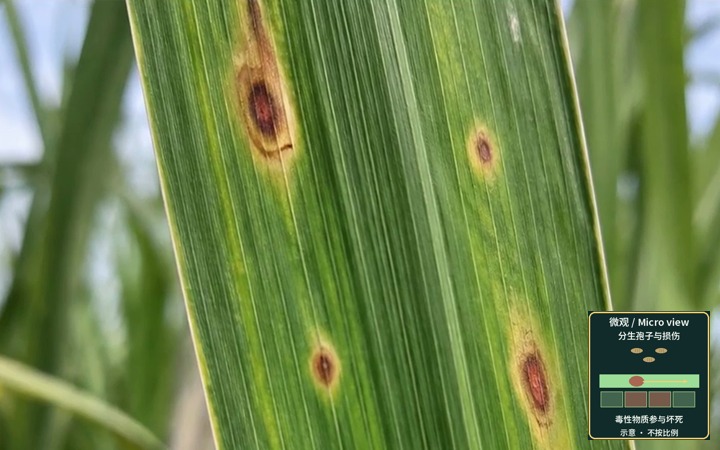
识别与危害Identification & damage
甘蔗叶上出现红褐色小眼状斑,要连同周围浅色边缘检查。病斑可能向叶尖延伸条纹,不能把所有褐斑都叫眼斑病。
Inspect small reddish-brown eyespots together with their paler margins. Some lesions develop runners toward the tip; not every brown spot is eyespot.
来源与传播Origins & spread
病叶可产生分生孢子,风雨把它们带到其他叶片。这里的重点是叶部传播,不能照搬种茎带病的传播画法。
Lesions produce conidia that wind and rain carry to other leaves. This pathway involves transmission between leaves.
生活史与微观过程Life cycle & microscopic processes
高湿和露水有利于孢子萌发,凉湿时尤其要留意新叶。病原是甘蔗平脐蠕孢菌,图中的分隔孢子只是结构示意。病斑周围的组织损伤,还与病菌产生的毒性物质有关。这不等于虫在叶里爬行,长条纹也不是虫道。
Humidity and dew favour germination; watch young leaves in cool wet weather. Bipolaris sacchari causes eyespot and produces septate spores. Fungal toxins contribute to tissue injury around lesions. Elongated runners are tissue damage, not insects tunnelling inside leaves.
田间检查与确认Inspection & confirmation
凉爽条件下较易看到向上的条纹,较热时可能不明显。拍下病斑中心、边缘和全叶,别只截取一条褐线判断。按固定叶位巡查,比较感病品种与邻近正常植株。与褐条病、轮斑等区分不清时,留样请植保或实验室确认。
Upward runners are more evident in cool conditions and may be absent in heat. Photograph lesion centres, margins and whole leaves, not isolated brown lines. Scout consistent leaf positions and compare affected varieties with nearby plants. Submit samples when eyespot is difficult to distinguish from other leaf spots.
预防、治理与复查Prevention, management & follow-up
优先选择当地证实抗病的品种,这是更可靠的预防方向。外地感病品种名单不能直接照搬,品种适应性也要一起评估。不把见斑就喷药作为常规,先看品种、扩展速度和实际影响。标记叶位后复查新病斑和新叶,旧坏死不会因为处理变绿。
Choose varieties with locally demonstrated resistance as the main preventive measure. Assess local adaptation rather than copying another region’s variety list. Avoid routine spraying for every spot; assess resistance, progression and impact. Recheck new lesions and new leaves; old dead tissue will not turn green.