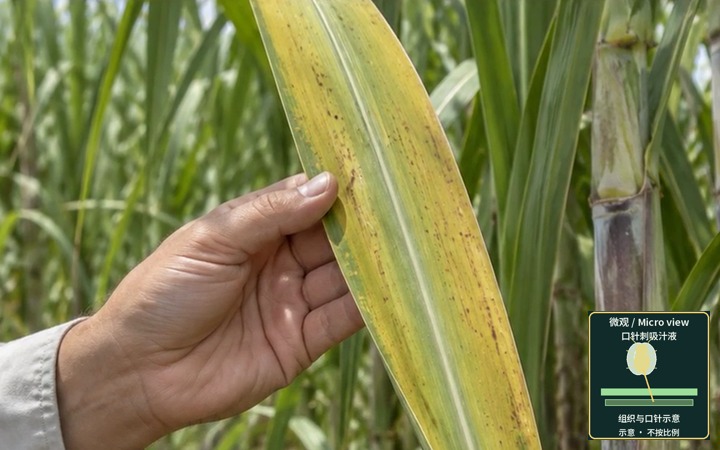
识别与危害Identification & damage
叶片发黄、变紫或干枯时,先翻看叶背。本片讲印度资料中的甘蔗粉虱,外观不能代替种类鉴定。
When leaves turn yellow or purple, or begin to dry, inspect their undersides. This species is reported from Indian sugarcane; appearance alone cannot confirm its identity.
来源与传播Origins & spread
成虫有覆着蜡粉的翅,会从邻近受害植株活动扩散。雌虫在叶背产卵,卵带小柄,常沿叶脉附近排列。
Wax-dusted winged adults can move from nearby infested plants. Females lay stalked eggs beneath leaves, often near a vein.
生活史与微观过程Life cycle & microscopic processes
刚产的卵较浅,随后变暗,不能把黑点都看成粪便。初孵若虫先爬行,找到位置后,贴着叶面取食。后期若虫扁平,颜色变深,边缘可见蜡质。常说的蛹,是末龄若虫阶段,并非蛾类那样的蛹。成虫羽化后会留下空壳,检查时要把空壳和活虫分开。微观图表示口针刺吸,不能据此认定它传播某种病毒。
New eggs are pale, then darken; not every black dot is droppings. New crawlers move briefly, then settle and feed on the leaf. Older nymphs are flattened and darker, with wax around the margin. The so-called pupa is the final nymphal stage, unlike a moth pupa. Adults leave empty cases; count those separately from living insects. Sap feeding alone does not establish that this insect transmits a particular virus.
田间检查与确认Inspection & confirmation
按固定路线翻查不同位置的叶片,记录活若虫和成虫。同时拍下叶色、虫群和天敌,下次用同样方法比较。
Inspect leaves along a repeatable route and record live stages. Photograph leaf colour, colonies and natural enemies for repeat checks.
预防、治理与复查Prevention, management & follow-up
保持适宜水分和排水,避免过量施肥促成过密长势。按当地要求处理严重带虫枯叶,减少对天敌的干扰。是否需要药剂,应结合活虫变化和当地防治建议。处理后复查新孵若虫,不以当天飞虫减少判断成功。
Maintain suitable moisture and drainage; avoid excessive fertilisation. Manage heavily infested old leaves locally and conserve natural enemies. Use live-insect trends and local advice to decide on treatment. Recheck new crawlers; fewer flying adults that day are not enough.