识别与危害Identification & damage
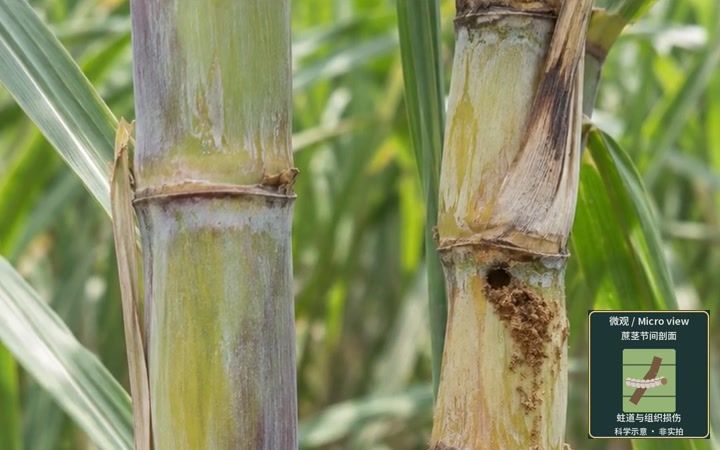
甘蔗节间缩短,又出现蛀孔,可能是节间螟留下的线索。这一集以印度亚种为例,先认清受害位置,再确认虫种。
Shortened internodes with holes can be clues to internode borer damage. This guide focuses on C. sacchariphagus indicus, as reported in Indian sugarcane. Locate the injury, then confirm the insect.
来源与传播Origins & spread
成蛾能飞入蔗田,带虫种茎也会让害虫跟着种苗移动。进田先查种苗来源,再检查叶片中脉附近、叶鞘和茎表。
Adult moths can enter fields; infested planting setts can also move the pest. Check the source of planting material, then inspect midribs, leaf sheaths and stalk surfaces.
生活史与微观过程Life cycle & microscopic processes
雌蛾把扁平、鳞片状的卵聚在一起;卵块是巡查重点。卵孵化后,幼虫开始取食;这时与已经深入茎内的虫不同。沿着节部的新鲜虫粪寻找蛀孔,必要时剖开少量受害茎。看清活幼虫和内部蛀道,才能把虫害与其他茎部损伤区分。这种亚种可在半干的叶鞘内结茧化蛹,检查别漏掉叶鞘。蛹羽化成为成蛾,下一轮产卵又开始;各阶段历时受环境影响。
Females lay clusters of flat, scale-like eggs: a key target for scouting. After hatching, larvae begin feeding; their exposure differs from larvae deep inside stalks. Follow fresh frass near a node to the hole; split a few affected stalks if needed. Look for live larvae and tunnels to distinguish borer activity from other stalk injuries. This subspecies can pupate in a cocoon inside a partly dried sheath; inspect it too. Pupae emerge as moths and another egg-laying cycle begins; timing varies with conditions.
田间检查与确认Inspection & confirmation
从田边走到田内,记录查了多少茎、多少有虫,以及卵块位置。不要只看一个旧蛀孔,也不要把诱到一只成蛾直接当作喷药信号。
Scout from the edge into the field; record stalks examined, active infestation and egg sites. An old hole or a single trapped moth alone is not enough to decide on spraying.
预防、治理与复查Prevention, management & follow-up
选无虫种茎,避免氮肥过量;按当地方法清理适宜清除的干叶鞘。保护天敌;采用赤眼蜂等措施时,按当地虫情和技术方案实施。确需用药时,核对当地登记和防治窗口,重点考虑入茎前的阶段。处理后复查新虫粪、活幼虫和新受害茎,让记录告诉你是否有效。
Use pest-free setts, avoid excess nitrogen and manage dry sheaths as locally recommended. Conserve natural enemies; use egg parasitoids such as Trichogramma through a local programme. If treatment is warranted, check local registration and target the stage before larvae enter stalks. Recheck fresh frass, live larvae and newly damaged stalks to assess the response.